Manga Artist Hisashi Eguchi Issues Apology Over Illustration Controversy and Shares His Perspective on Tracing
Manga artist Hisashi Eguchi addressed a recent controversy surrounding one of his illustrations on December 30, posting a detailed statement on his official X account.
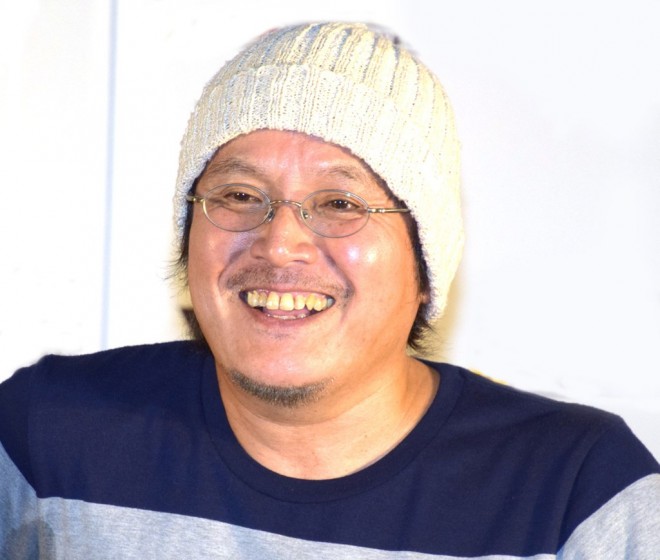
Hisashi Eguchi (C)ORICON NewS inc.
He released a lengthy written statement explaining the sequence of events that led to the dispute.
Referring to the situation, Eguchi wrote that the series of confusion and controversy on social media stemmed from one of his own posts made on October 3 this year. He explained that prolonged coordination with various parties delayed his ability to communicate in his own words, and he offered a sincere apology to everyone who had been concerned during that time.
Background of the Incident and Apology
Regarding the origin of the issue, Eguchi explained that while creating a poster for the LUMINE Ogikubo Chuo Line Cultural Festival held this autumn, he had used as reference a photograph of artist Kyu Kanai posted on her Instagram, showing her profile. He admitted that he did so without proper consideration for her and without permission. Immediately after the poster was released, a complaint from Kanai was sent to LUMINE. Eguchi stated that he promptly contacted her via direct message to apologize, and that the matter was subsequently resolved through a mutual settlement agreed upon by both parties with the involvement of legal counsel.
He went on to apologize again to Kanai, LUMINE, all related parties, and those who had been looking forward to the event. He also expressed regret toward various companies and stakeholders who were inconvenienced when the issue spread to his past works following this incident.
His View on Tracing and Artistic Process
Eguchi noted that the controversy expanded into a broader debate about tracing and so called trace plagiarism, growing into a much larger issue. He acknowledged that many opinions labeled tracing as inherently wrong, including using magazine photos or online images as reference, and stated that he wanted to share his personal views on tracing.
He emphasized that tracing is one legitimate step in the process of drawing, and that it should not be simplistically equated with theft or plagiarism. In his own workflow, he described tracing as the very first stage of rough sketching.
He explained that whether using magazine photos or photographs he took himself, he always begins by tracing only to establish rough placement and layout. This stage, known as an “atari,” is used to determine composition and cropping within the page. He stressed that tracing ends at this point. Afterward, he layers multiple stages of sketching on top of that foundation, gradually modifying the pose, contours, and structure to transform the reference into his own illustration.
Eguchi pointed out that many people seem to believe tracing means placing thin paper over a photo and copying it from start to finish, but he stated that anyone with drawing experience would understand that such a method could never result in a truly original illustration.
Clarifying Tool Usage and Misconceptions
He also addressed claims circulating on social media that his illustrations could be easily created using computer tracing tools, or that he merely extracted line art from photos using AI and added color. Eguchi firmly denied these assertions, stating that he does not use any such tools. While clarifying that analog methods are not inherently superior, he explained that in his case, all sketching and inking is done entirely by hand using traditional techniques, and that Photoshop is used only for coloring.
Regarding his philosophy of illustration, Eguchi reiterated that he has long described his work as something that is constructed rather than simply drawn. He likened the sketching stage to drafting blueprints for an illustration. Once the sketch is perfected, inking becomes the most enjoyable part of the entire drawing process for him. He emphasized that the movement, subtle variations, and unexpected lines that emerge during inking are unique to the moment and are essential to what makes an illustration distinctly his own.
Changing Standards and Self Reflection
Eguchi also discussed the practice of drawing from photographic references, noting that he had been doing so since his earlier days focusing more on manga than illustration, and that it has historically been a common practice within the industry. He explained that while he had always believed drawing from published photo books or collections was unacceptable, he had long regarded magazine photos as informational material similar to photographs he took himself, and therefore usable as reference. He admitted that he did not fully recognize this as problematic.
However, he acknowledged that social norms, values, and ethical standards change over time. He stated that the core issue in this incident was his failure to recognize and account for those changes. He reflected that he had continued working with the same methods for decades, unconsciously relying on outdated perceptions formed during his youth more than forty years ago.
Although avoiding legal discussions as a layperson, Eguchi shared that he consulted with professional lawyers. He explained that referencing poses or fashion styling alone does not constitute copyright infringement, and that if an illustration is sufficiently transformed so that viewers cannot identify the original subject, it may not violate portrait or publicity rights. Nevertheless, he acknowledged that such matters are judged on a case by case basis, and that even if something is legally permissible, the person depicted may feel discomfort or distress upon seeing an illustration resembling themselves without their knowledge. He admitted that he failed to sufficiently consider such feelings.
Looking back over the past two decades, Eguchi reflected that he may have taken on too much illustration work, allowing complacency, carelessness, and arrogance to develop, believing that as long as the result looked like his own style, the source did not matter. He stated that he must seriously reexamine this mindset.
He concluded by saying that this incident gave him an opportunity to reconsider his methods of expression, and that he intends to take the harsh feedback he received seriously and apply those lessons to his future work.
Closing Remarks and Aftermath
Eguchi ended his statement by saying that he will continue drawing, as he feels he has not yet accomplished anything definitive. He expressed his belief that his art will continue to evolve, and closed by wishing everyone a happy New year.
The controversy surrounding Eguchi’s illustrations began in early October, triggered by a promotional visual for the LUMINE Ogikubo Chuo Line Cultural Festival 2025, held on October 18 and 19. The situation escalated into a broader tracing related controversy, prompting companies such as Denny’s, Zoff, Saison Card, and Kumamoto Wine Farm to respond individually.
江口です。この秋の一連の騒動につきまして。 pic.twitter.com/Ng6C4fxP9q
— 江口寿史 (@Eguchinn) December 30, 2025
Source : ORICON NEWS

Related News
[This Week in Japan] Manga Creator Hisashi Eguchi Faces Backlash Over Tracing Scandal
This week, Japan was abuzz over a controversy involving manga artist and illustrator Hisashi Eguchi, known ...
![[This Week in Japan] Manga Creator Hisashi Eguchi Faces Backlash Over Tracing Scandal](/upimg/thumb/6000/6523/img280/eguchi-hisashi-solo-exhibition-tokyo-kanojo-16.jpg)
Hideaki Anno Expresses Regret Toward Former Gainax Executives After Bankruptcy Closure
Hideaki Anno, representative director of Studio Khara, issued an official statement following the completio...
ONE PIECE Official Flagship Store Issues Apology and Suspends Merchandise Sales After Opening Day Mishandling
The ONE PIECE BASE SHOP, the official flagship store of the global hit franchise ONE PIECE, has suspended m...

[Editor’s Picks] Japan’s PM Takaichi’s Remarks Trigger Chinese Countermeasures, Impacting Japan’s Content Industry
China’s countermeasures following PM Takaichi’s remarks are disrupting Japan’s content market, affecting an...
![[Editor’s Picks] Japan’s PM Takaichi’s Remarks Trigger Chinese Countermeasures, Impacting Japan’s Content Industry](/upimg/thumb/7000/7037/img280/japan-china.jpg)
Voice Actor Yuki Kaji’s Agency Issues Warning Over False Online Rumors: “The Harm Has Reached His Family” — Sets Up Reporting F...
Yuki Kaji’s agency VIMS warns against false online rumors, confirming legal action and opening a defamation...