


[Editor’s Picks] Japan’s PM Takaichi’s Remarks Trigger Chinese Countermeasures, Impacting Japan’s Content Industry
Following Prime Minister Takaichi’s parliamentary remarks concerning a potential Taiwan contingency, the Chinese government issued an advisory urging tourists and students to refrain from traveling to Japan. Anti-Japan sentiment has also grown domestically in China, and significant impacts are expected on Japan’s anime and broader content market. For the anime industry, which was projected to continue its strong momentum in the world’s second-largest film market this year, these developments may pose a considerable setback.

Immediate Restrictions Following Takaichi’s Remarks
Immediately after Prime Minister Takaichi’s comments, China’s National Film Administration suspended screenings of new Japanese films, indefinitely postponing the release of at least six titles that had already been approved. More than 20 live performances by Japanese artists, as well as shows by Japanese comedy troupes, were also cancelled in quick succession.

Maki Otsuki (C)ORICON NewS inc.
On the twenty-eighth, an incident occurred at an event themed around Japanese pop culture properties such as the anime “One Piece.” During the event, Japanese singer Maki Otsuki was forced to halt her performance mid-song when the stage lights and audio were abruptly cut. Although the event was originally scheduled to run until the thirtieth, organizer Bandai Namco has since cancelled the remainder of the program.
Many Chinese anime fans were in attendance, but once Otsuki began singing the theme song from One Piece, the lighting and sound were suddenly shut off mid-performance, bringing the concert to an immediate and compulsory end.
Concerns Over the Screening of Demon Slayer

In mainland China, the anime film “Demon Slayer: Kimetsu no Yaiba – Infinity Castle: Part 1 – Akaza’s Return” opened on November 14. However, Chinese media reported on November 18 that its box-office earnings had sharply slowed in recent days. Among Chinese anime fans, there is growing concern that the film’s screenings may be suspended entirely.
Even before this decline in revenue was reported, two other Japanese films had already been postponed. The release of Crayon Shin-chan the Movie: Super Hot! The Spicy Kasukabe Dancers, originally set for December 6, and the film adaptation of Cells at Work!, scheduled for November 22, have both been delayed indefinitely. China Central Television’s digital edition stated that these decisions were made “out of consideration for the sentiments of our audience.”
Cancellations Affecting Sailor Moon Stage Performances
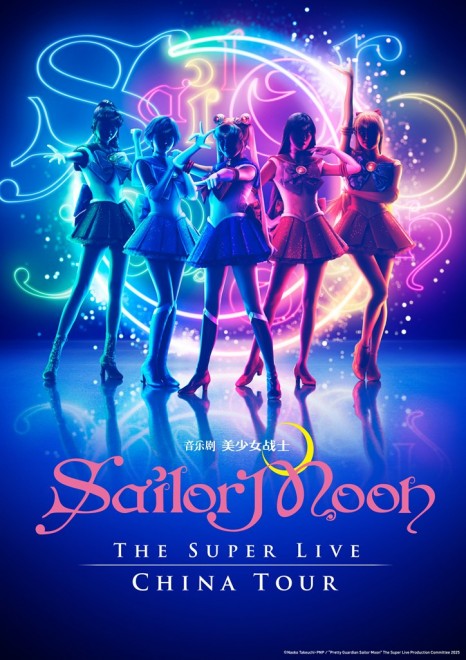
Pretty Guardian Sailor Moon: The Super Live
Live events by Japanese artists in China have also faced widespread cancellations amid heightened tensions in Japan–China relations following Prime Minister Takaichi’s remarks.
The Chinese tour of “Pretty Guardian Sailor Moon: The Super Live,” a musical performance show, has been directly impacted as well. All three shows scheduled for Hangzhou from November 28 to November 29 were canceled “in accordance with unavoidable circumstances and local decisions.” The Beijing tour dates, consisting of five performances from December 19 to December 21, have also been officially cancelled. Negotiations are still ongoing regarding the planned Shanghai performances.
Conclusion
This series of developments highlights once again the “China risk” inherent in content-related business activities in China, where outcomes are easily influenced not only by economic factors but also by cultural regulations and political tensions. Even in a market of enormous scale, sudden policy shifts and geopolitical developments can unpredictably restrict access and hinder revenue opportunities for foreign content companies.

Related News
Kodansha, KADOKAWA, Shueisha, and Shogakukan Win Copyright Lawsuit Against Cloudflare for Supporting Manga Piracy Sites
Major Japanese publishers Kodansha, KADOKAWA, Shueisha, and Shogakukan have won a copyright infringement la...

Dragon Ball Super Ending Theme Band LACCO TOWER Reports Keyboardist Injured in Accident and Receiving ICU Treatment
Five–member rock band LACCO TOWER announced on the fifteenth that their keyboardist, Shinichi Jet, had been...

Maya Imamori Exits No.1 Sentai Gozyuger After Underage Drinking Incident; Management Contract Terminated
On November 8, Toei announced that Maya Imamori (19), who plays Sumino Ichikawa / Gozyu Unicorn in the TV A...

Uma Musume Pretty Derby Patent Lawsuit Settled as Cygames and Konami Reach Agreement for “Early Resolution of the Dispute”
Cygames announced on November 7 that it has reached a settlement with Konami Digital Entertainment regardin...

[This Week in Japan] Manga Creator Hisashi Eguchi Faces Backlash Over Tracing Scandal
This week, Japan was abuzz over a controversy involving manga artist and illustrator Hisashi Eguchi, known ...
![[This Week in Japan] Manga Creator Hisashi Eguchi Faces Backlash Over Tracing Scandal](/upimg/thumb/6000/6523/img280/eguchi-hisashi-solo-exhibition-tokyo-kanojo-16.jpg)