


[Editor’s Picks] Why Gundam Became a Legendary Franchise: The Impact of G Gundam and Gundam Wing
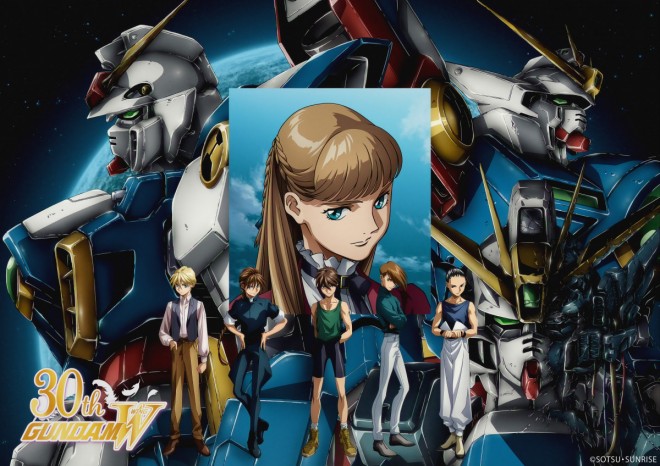
At San Diego Comic-Con (SDCC) on July 24, new information was revealed about three major titles. Among them was a special video commemorating the 30th anniversary of Gundam Wing.
Gundam Wing played a pivotal role in expanding the Gundam fanbase beyond its traditional audience, appealing especially to younger viewers and female fans. With its distinctive mecha designs and visually compelling characters, it spawned numerous side stories and sequels, earning widespread popularity.
Let’s explore how Gundam grew into the multimedia giant we know today.
Gundam Wing: Attracting Female Fans and Going Global
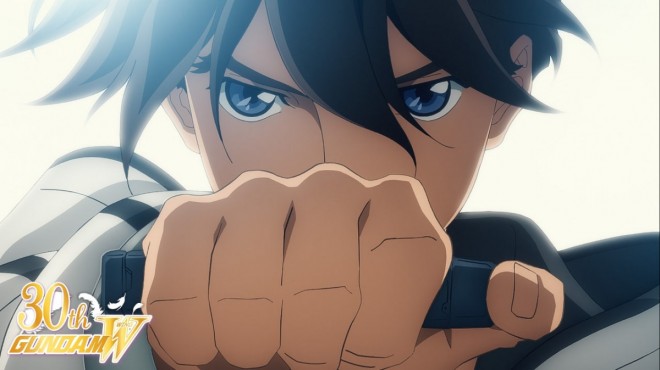
Heero Yuy from The Special Video Mobile Suit Gundam Wing -Operation 30th- ©Sotsu, Sunrise
Following this, 1995’s Mobile Suit Gundam Wing marked another critical shift. Centered on five attractive male protagonists—Heero Yuy, Duo Maxwell, Trowa Barton, Quatre Raberba Winner, and Chang Wufei—the series captured the hearts of female fans, a demographic previously less targeted by Gundam.
The series also aired on the U.S. anime programming block Toonami, where it received an enthusiastic response. This exposure led to wider international recognition of the Gundam brand, contributing significantly to its overseas success. Coupled with the global anime boom of the late 1990s, Gundam Wing made a major impact on fans in North America and Europe.
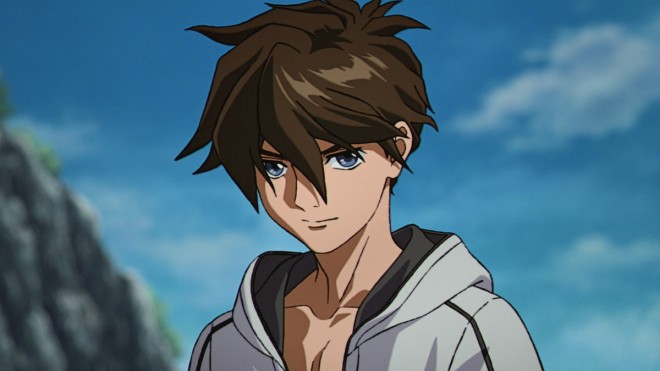
Heero Yuy from The Special Video Mobile Suit Gundam Wing -Operation 30th- ©Sotsu, Sunrise
The sleek character designs and stylish mobile suits also appealed to female audiences and helped the series gain traction in women’s media outlets. While previous Gundam series had attracted female fans, none had generated idol-like appeal to the extent Gundam Wing did.
Adding to its cultural impact, the show’s opening theme by TWO-MIX—an anime music duo featuring voice actress Minami Takayama—became a breakout hit. Anime songs had long been dismissed as “for kids” and rarely received mainstream media attention, but TWO-MIX’s success helped shift that perception. Although airtime was still limited, its frequent appearances on music programs hinted at the growing role anime music would come to play in broader entertainment marketing.
G Gundam: A Bold New Direction That Broke the Mold
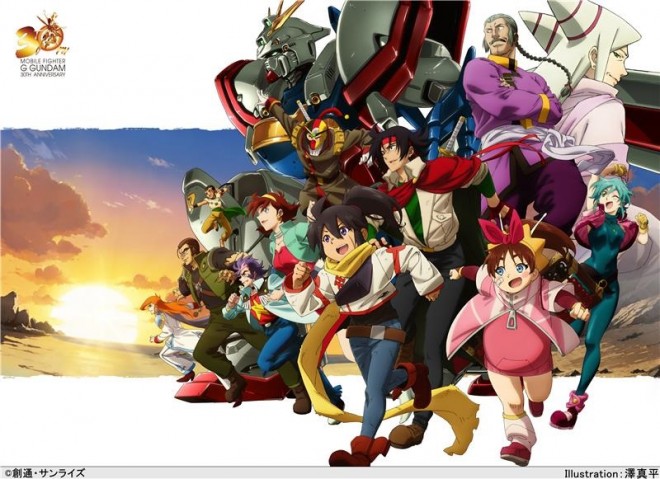
G gundam The East is Burning Red ©Sotsu, Sunrise
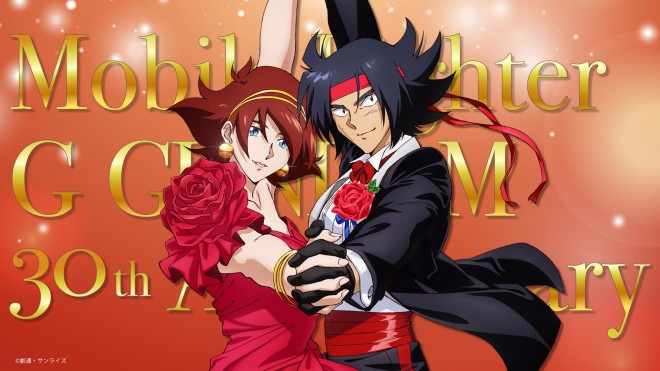
Since the original broadcast of Mobile Suit Gundam in 1979, the franchise has produced a vast number of works, eventually becoming a multimedia empire. But the true turning point toward a diversified and expansive Gundam universe came in the 1990s with Mobile Fighter G Gundam (1994) and Mobile Suit Gundam Wing (1995). These two titles introduced alternative universes, moving beyond the traditional Universal Century (UC) storyline and reshaping the franchise as we know it today.
G Gundam, which aired in 1994, departed radically from the Universal Century canon. Instead of large-scale wars, it focused on a global fighting tournament called the Gundam Fight, where each country was represented by its own Gundam and pilot. This created a vivid international cast of characters and introduced a more action-driven, martial-arts-centered narrative. Though controversial at the time, this approach injected fresh energy into the franchise.
Rain & Domon ©Sotsu, Sunrise
Following Victory Gundam in 1993, which adhered to traditional Gundam themes of war and human ego, G Gundam delivered hot-blooded battles and intense emotional drama. Its protagonist wasn’t a soldier but a martial artist.
This reinvention shattered preconceptions of what a Gundam series could be. It proved that as long as the core concept remained, Gundam stories could thrive in radically different settings. As a result, the franchise attracted a younger and more diverse audience.
Director Yasuhiro Imagawa, influenced by kung fu cinema and action stars like Bruce Lee and Jackie Chan, crafted spectacular fight sequences that appealed not only to anime fans but also to action movie enthusiasts. (We also recommend checking out his wildly unique series Giant Robo!)
G Gundam was a transformative title that demonstrated Gundam could evolve beyond its mechanical roots and reach new creative heights.
Diversifying the Franchise for Long-Term Growth
The success of G Gundam and Gundam Wing accelerated the diversification of the Gundam universe. No longer confined to the Universal Century, the franchise began releasing series set in entirely new timelines with distinct worlds and characters. These bold changes attracted a wider fanbase, setting the stage for subsequent titles such as Gundam SEED, Gundam 00, and Iron-Blooded Orphans.
This expansion also transformed Gundam into a full-scale multimedia property, encompassing video games, films, model kits, merchandise, and more. Without a doubt, G Gundam and Gundam Wing laid the groundwork for Gundam’s rise into a global franchise.
In fact, G Gundam has recently returned with a new web novel. And with Gundam Wing boasting a wealth of side stories and sequels, I am eagerly hoping for a new animated installment in the near future.

Related News
“Gundam Wing” 30th Anniversary Video Unveils New Characters and Mobile Suits Not Seen in the Original Anime — Including Wing Gu...
To mark the 30th anniversary of Mobile Suit Gundam Wing, a brand-new key visual and a special commemorative...

Gundam Franchise Unveils 3 Major Updates: Iron-Blooded Orphans Urdr-Hunt Hits Theaters Oct 31, Gundam W 30th Visual and Special...
The Gundam franchise made major announcements for three titles during the “GUNDAM Showcase - Featuring 30 Y...

[Editor’s Picks] Do You Know CoroCoro Comic? A Manga Magazine Behind Japan’s IP Boom
Have you ever heard of CoroCoro Comic, one of Japan’s leading monthly manga magazines that has driven numer...
![[Editor’s Picks] Do You Know CoroCoro Comic? A Manga Magazine Behind Japan’s IP Boom](/upimg/thumb/5000/5520/img280/Fate-Rewinder-Manga-1.jpg)
Anime Expo’s Expanding Influence and the Rise of Global Animation: A Personal Note from the Editor
As the editor of Japan Anime News, I’ve tried to publish at least one feature a week on Japanese anime cult...
.jpg)
[Editor’s Picks] Why Do Anime Episodes Get Delayed? Exploring the Reasons Behind Broadcast Interruptions and Hiatuses
Why are anime episodes delayed or paused? Learn about production delays, network schedules, and the realiti...
![[Editor’s Picks] Why Do Anime Episodes Get Delayed? Exploring the Reasons Behind Broadcast Interruptions and Hiatuses](/upimg/thumb/5000/5148/img280/combined_anime_images.jpg)