


[Editor’s Picks] Do You Know CoroCoro Comic? A Manga Magazine Behind Japan’s IP Boom
Have you ever heard of CoroCoro Comic, one of Japan’s leading monthly manga magazines that has driven numerous cultural phenomena in Japanese IP content?
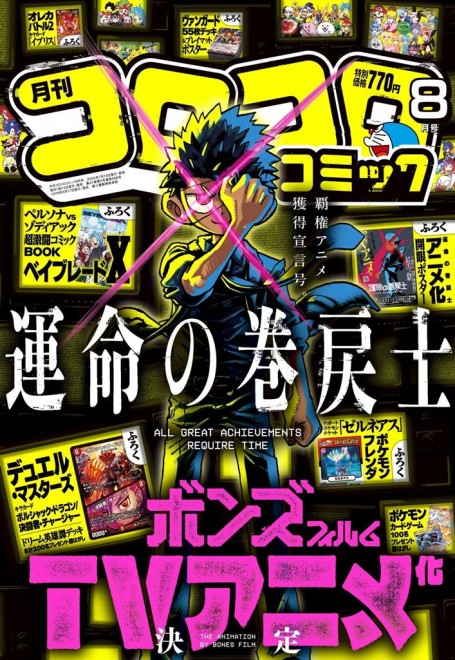
Monthly Corocoro Comic Aug. 2025 (Fate Rewinder version)
This week, the announcement of an anime adaptation for the manga Fate Rewinder, currently serialized in CoroCoro Comic, became a hot topic. Contrary to being a niche publication, CoroCoro Comic is a household name in Japan, recognized by people of all ages—from children to adults.
When the anime adaptation by BONES was announced, it reminded me of a conversation I had with a friend. He said, “Lately, my kid is absolutely hooked on this manga, and I’ve been reading it too.” Because CoroCoro Comic is traditionally seen as a magazine for elementary school kids, I initially dismissed it with a casual “Hmm, interesting.” Looking back, I feel embarrassed by that reaction.
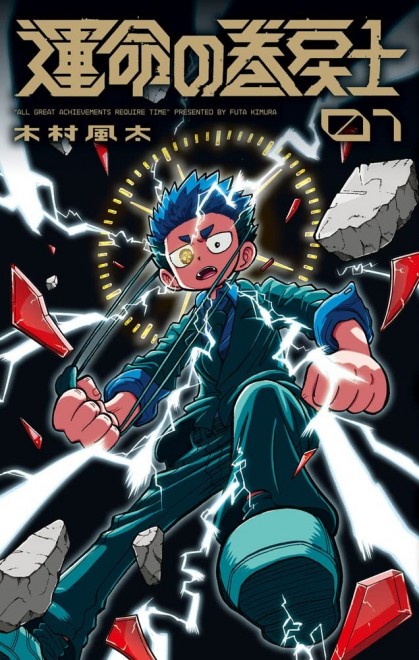
Manga Fate Rewinder Vol.1
Following the announcement, many users on social media praised the series, prompting me to head to a manga café—an establishment commonly found in Japan where you can read manga in private booths with free drinks and internet access—and binge-read the series.
In a word, it’s fantastic. Though the artwork and tone are designed to be easily accessible for younger readers, the storyline and characters evoke deep empathy, making its popularity easy to understand.
I had forgotten how CoroCoro Comic has long been a rare and powerful force in fueling the rise of Japan’s IP content.
Today, I’d like to explore both CoroCoro Comic and Fate Rewinder in more detail.
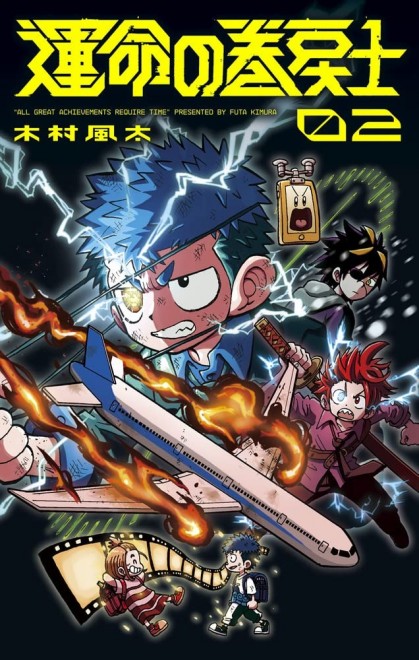
Manga Fate Rewinder Vol.2
The Iconic Franchises Launched by CoroCoro Comic
For decades, CoroCoro Comic has led the way in shaping children’s entertainment and has firmly established itself as the instigator of major cultural booms. Here are just a few of the iconic crazes it helped ignite:
■Bikkuriman
In the late 1980s to early 1990s, Bikkuriman Choco caused a national frenzy. CoroCoro was quick to serialize it in manga form, helping spread its popularity.
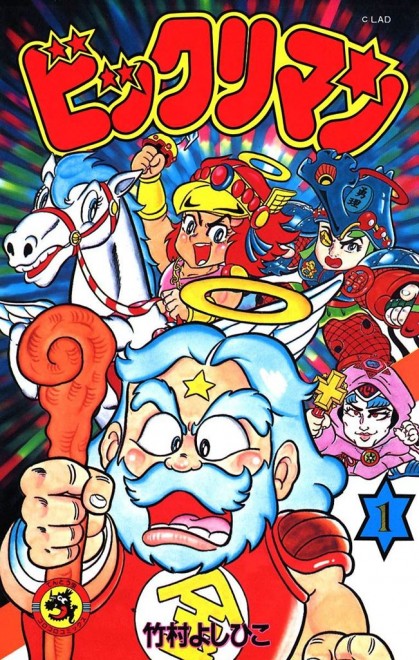
Bikkuriman
■Mini 4WD
The 1990s saw a period where CoroCoro Comic was synonymous with Mini 4WD racing cars. Titles like Dash! Yonkuro and Bakusou Kyoudai Let’s & Go!! were essential reading for many boys in Japan—boys who are now grown-ups.
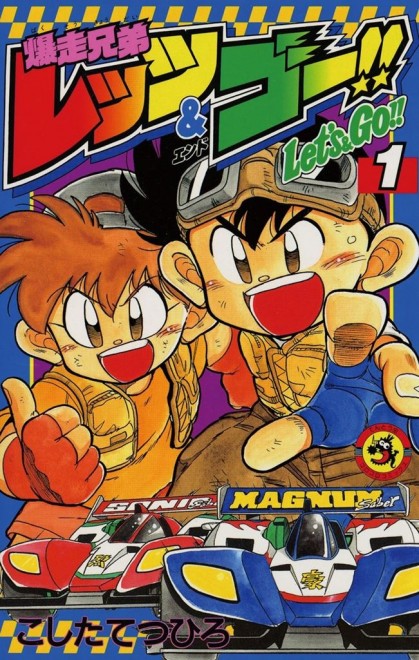
Bakusou Kyoudai Let’s & Go!!
CoroCoro Comic also played a significant role in boosting other major franchises like Beyblade and Pokémon. I personally stopped reading CoroCoro around the time Pokémon was becoming an anime, but I vividly remember how the franchise exploded in popularity afterward. When the original Game Boy Pokémon games were released, they weren’t immediately a social phenomenon. I bought Pokémon Green, and none of my classmates were playing it at the time.
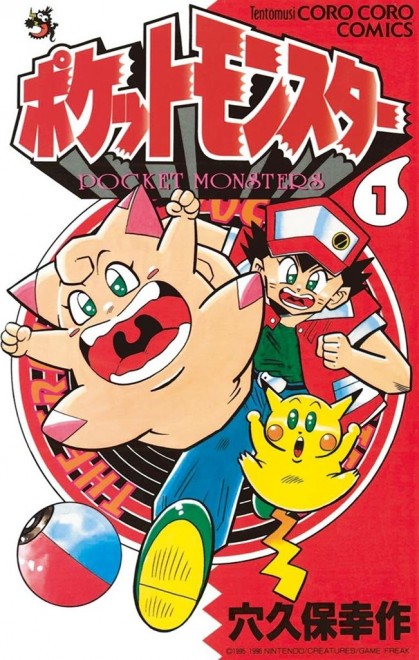
Manga Pokémon Pocket Monsters
Back then, Monthly Comic BomBom—a rival publication from Kodansha targeting the same demographic—was in competition. However, CoroCoro clearly outperformed with its collaborative efforts and tie-ins that elevated its content into social phenomena. From Bikkuriman to Pokémon and Yo-kai Watch, the magazine has consistently churned out mega-hit franchises.
CoroCoro Comic Ranks #3 Among All Shonen Manga Magazines
Despite a struggling publishing industry, CoroCoro Comic has maintained impressive circulation numbers. This may be partly because elementary school readers are still more engaged with physical books than digital platforms—but even so, the sales figures are noteworthy.
In fact, CoroCoro Comic boasts the third-largest circulation among all boys' manga magazines, behind only Weekly Shonen Jump and Weekly Shonen Magazine. It even surpasses Weekly Shonen Sunday.
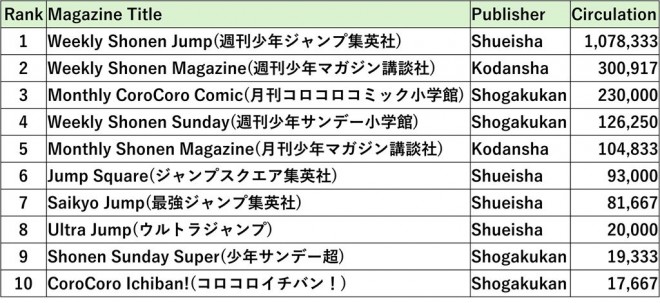
CoroCoro Comic Ranks No.3 Among All Shonen Manga Magazines (Source: JMPA)
Do not underestimate it just because it’s aimed at children—it plays a crucial role in Japan’s manga market.
From Comedy to Drama: A Wide Spectrum of Manga
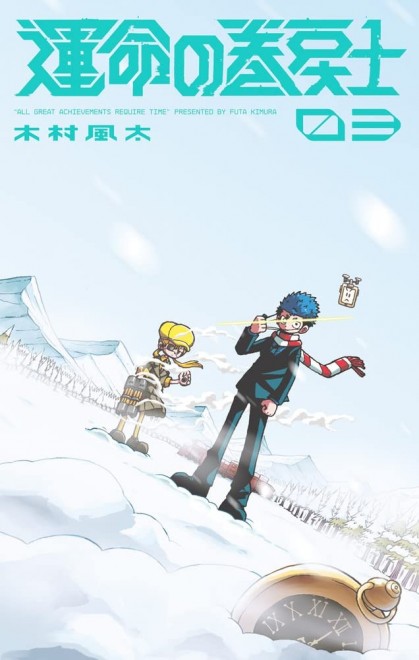
Manga Fate Rewinder Vol.3
The manga featured in CoroCoro Comic spans everything from lighthearted commercial tie-ins to laugh-out-loud comedy and more serious, emotionally driven stories.
That said, the magazine generally caters to young boys who tend to enjoy goofy humor more than girls. As the interview from 2017 described, CoroCoro Comic often featured potty humor—the kind of jokes involving poop and pee that boys love to laugh at. (source: IT Media)
Dodge Danpei, which had its sequel anime announced just one day after Fate Rewinder, is a prime example. While it’s a passionate sports manga about dodgeball, it also includes crude jokes and slightly risqué scenes that stir curiosity in young readers.
Its sequel, Dodge Danko, takes the crude humor to an even more extreme level—so much so that it’s become too juvenile for adult readers like myself. But for elementary school boys, it’s a guaranteed hit.
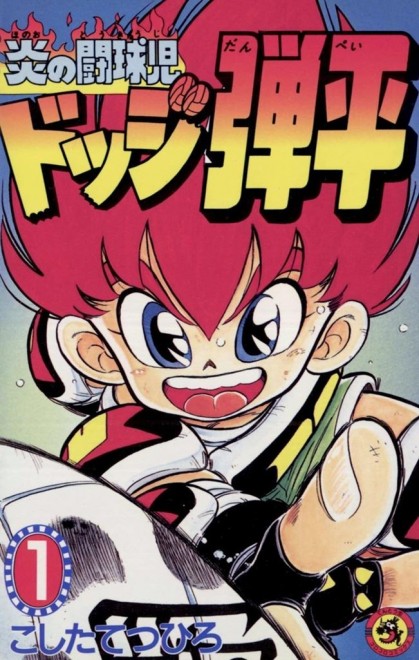
Dodge Danpei
CoroCoro Comic occasionally delves into more intense storytelling. For example, Kamen Rider SD: Hurricane Legend sounds like a fun read for kids at first glance, but it features gritty artwork reminiscent of Fist of the North Star—albeit adjusted for younger audiences.
Among such diverse titles in CoroCoro Comic’s long history, Fate Rewinder clearly stands apart.
Fate Rewinder
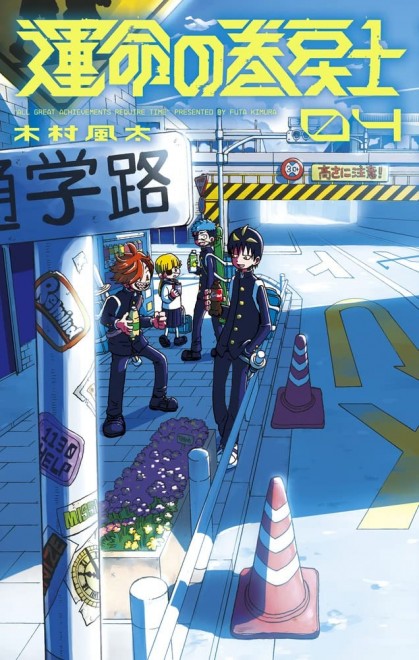
Manga Fate Rewinder Vol.4
Fate Rewinder is not a tie-in with any existing merchandise but an original title created by CoroCoro Comic. It first appeared as a one-shot in the 2021 special issue Miracoro Grand Prix and received such strong feedback that it was later featured in the September 2021 issue of Monthly CoroCoro Comic. Serialization began with the February 2022 issue. A dedicated YouTube channel was even launched on March 18, 2022, as part of a franchise project—an unusual level of investment for the magazine.
The Japanese title centers on the protagonist’s job as a “巻戻士” (Rewinder)—a made-up profession that implies “one who rewinds time.” The term immediately evokes the concept of time travel. When I first heard about it from a friend, I casually assumed it was a light time-travel story for kids.
The story follows Chrono, a new recruit in the Space-Time Police Special Forces Unit, whose mission is to save people who died due to unforeseen accidents or incidents.
Volume 1 starts off as a fun time-travel adventure, but the tone begins to shift in Volume 2. We learn that Chrono became a Rewinder because of a tragic event—the death of his sister. Even a famous Rewinder who appeared during the incident failed to save her. It becomes clear that a hostile group is interfering with Rewinders, adding the element of sabotage. On top of that, superpowers known as “異能力” (special abilities) complicate the narrative even further.
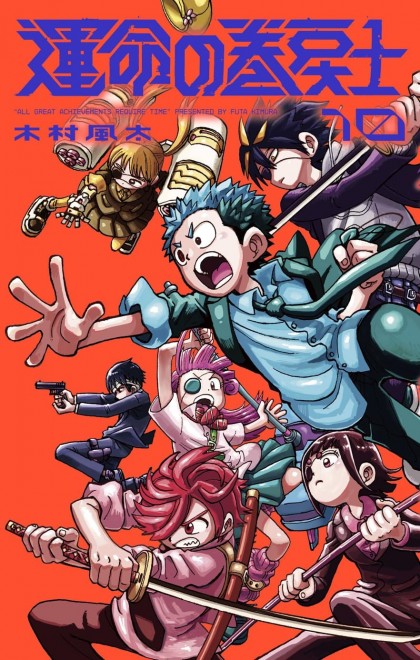
Manga Fate Rewinder Vol.10
These ability-based battles expand in variety and start to resemble the intricate, strategy-driven fights seen in JoJo’s Bizarre Adventure. The growing diversity of powers also leads to an increase in captivating characters.
Each episode often includes a two-layer structure: even after the mission appears to be resolved, a new tragedy emerges, prompting another time rewind to address it. The intricate storytelling and emotionally resonant twists make it a compelling read—not just for children, but for audiences of all ages. The anime adaptation is definitely something to look forward to.
Much like Weekly Shonen Jump has its reader polls, CoroCoro Comic also runs popularity contests in each issue. Impressively, Fate Rewinder made history by ranking #1 for 12 consecutive months—the first title in the magazine’s history to do so. Its popularity is beyond dispute.
Conclusion
While CoroCoro Comic may not have much global recognition, it continues to be one of the key manga magazines driving the growth of Japanese content IP. The popularity of Fate Rewinder and CoroCoro Comic's dedication, seen in its media mix strategy utilizing YouTube and the involvement of BONES in the anime production, clearly showcases their serious commitment. It will be exciting to see how much of a mega-hit can emerge from an original manga without any manufacturer collaboration, and we’re keen to follow its future developments.

Related News
Fate Rewinder Anime Announced With Director Rie Matsumoto
Fate Rewinder, the manga by Futa Kimura serialized in Monthly CoroCoro Comic, is being adapted into a TV an...
[Manga] 'Super Mario-kun' Volume 60 Released, Celebrating 34 Years of Longest-Running Manga in CoroCoro Comic
The 60th volume of the manga Super Mario-kun, which boasts a 34-year-long run as the longest series in Coro...
![[Manga] 'Super Mario-kun' Volume 60 Released, Celebrating 34 Years of Longest-Running Manga in CoroCoro Comic](/upimg/thumb/1000/1556/img280/1f43c92fd42879a3a0d4a02e32bfb9b8.jpg)
[Manga Reviews] The Days of Diamond by Ohashi Hirai - Weekly Young Jump
The Days of Diamond (by Ohashi Hirai) is a Japanese manga in Weekly Young Jump from Feb 2022.
![[Manga Reviews] The Days of Diamond by Ohashi Hirai - Weekly Young Jump](/upimg/thumb/1000/1767/img280/7aa90657789a5077346fd5944c8ac08d.jpg)
[Manga Reviews] Thunder 3 by Yuki Ikeda - Monthly Shonen Magazine
Thunder 3 (by Yuki Ikeda) is a Japanese manga in Monthly Shonen Magazine from Jun 2022.
![[Manga Reviews] Thunder 3 by Yuki Ikeda - Monthly Shonen Magazine](/upimg/thumb/1000/1693/img280/bee8328b763eb1d9d48c1b501d034cc6.jpg)