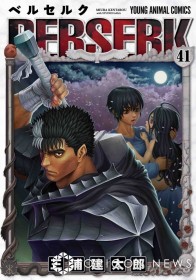
An Introduction to Berserk: Kentaro Miura’s Masterpiece That Shaped Dark Fantasy Across Media
2. Why is Berserk so important?
Before we dive into the details of Berserk, I’d like to explain the importance of this epic saga, which has been going on for more than three decades, even after the shocking passing of Kentaro Miura in 2021, that left many fans, including myself, heartbroken.
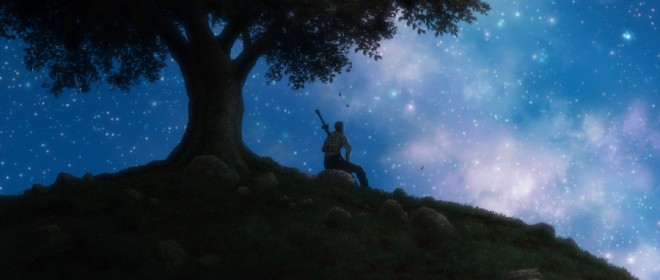
Scene from Berserk: The Golden Age Arc – Memorial Edition (C) Kentaro Miura (Studio Gaga), Hakusensha / Berserk Production Committee
The dark fantasy concepts were used long before Miura’s masterpiece, such as Osamu Tezuka’s greatly influential manga Dororo, or our beloved Lord of the Rings, and even the Batman comics, along with many other works before Berserk.
During the first volumes of Berserk (mainly the famous Black Swordsman Arc), Guts was not really a standout, once-in-a-generation type of character. Of course, from the first page of the first volume, Guts is introduced to us as a mysterious, complex character with a slight villainous aura, but even with all the grim aesthetics of his character design, he was not as unique as Batman or Spider-Man. Through the first two arcs of the series (the Black Swordsman Arc and the Golden Age Arc), he evolved into the Guts that we know today: a character who is instantly recognizable, from his design to his personality, from his heartbreaking journey to his unbeatable might. Guts is so unique that you can immediately recognize his influence in other characters from other games, manga, and so on. It may have taken one or two volumes to make Guts one of the best main characters ever created, and to give him his own place next to other beloved fictional characters such as Bruce Wayne.
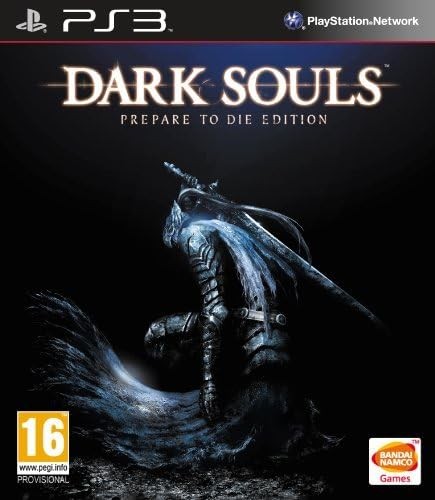
Berserk has had a huge influence on many video games, such as the Dark Souls series. ©Bandai Namco Entertainment Inc. / ©2011-2018 FromSoftware, Inc.
So how could Berserk have defined dark fantasy as a genre and influenced many works that came after it?
The short answer is the artwork. In the era when animation was becoming more popular than ever, and still images might not have been able to capture the essence of fantasy as well as animation, Miura’s obsessively detailed artwork gave every character, monster, building, and city a presence that we were able to almost feel and maybe even dream about. The artwork was so masterfully drawn that it made Berserk’s animation production almost impossible for its time. The great use of black-and-white contrast and shadows, along with ingenious character and monster designs, made them feel alive and breathing. That is why Berserk became the ultimate dark fantasy experience for fans all over the world.
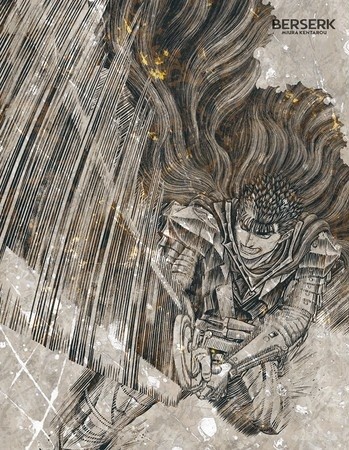
Guts (C) Kentaro Miura (Studio Gaga), Hakusensha / Berserk Production Committee
Berserk also has a blend of different cultures and historical eras, which, combined with its artwork and storytelling, gives the readers a transparent display of various philosophies, concepts, and themes. Almost every character carries a symbol, or sometimes multiple symbols, which you see through their looks or dialogue. This has made the understanding of these complex philosophies (such as fate and free will, or trauma and resilience) more interesting and engaging, as if we are also feeling the characters’ emotions and understanding their logic and points of view.
This approach to picturing human philosophy and storytelling, alongside its well-crafted characters and the series’ longevity and success, has allowed Berserk to influence many artworks across various forms of media, such as video games, manga, anime, and even movies, making it a must-read for anyone who likes fantasy.
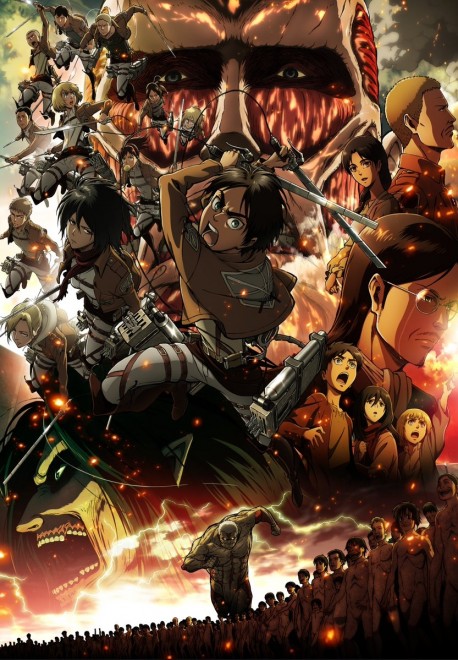
Many famous manga/anime, such as Attack on Titan, have been directly influenced by Berserk.© Hajime Isayama, Kodansha / “Attack on Titan” Production Committee
3. Origins of Berserk & Kentaro Miura’s Legacy
Kentaro Miura was born on July 11, 1966, in Chiba, Chiba Prefecture, Japan. He started drawing manga when he was 10 years old, and when only he was 18, he became the assistant of the famous George Morikawa (the creator of Hajime no Ippo). He was eventually dismissed by Morikawa due to his high-level skills, since there was nothing left to be taught, as stated by Morikawa himself.
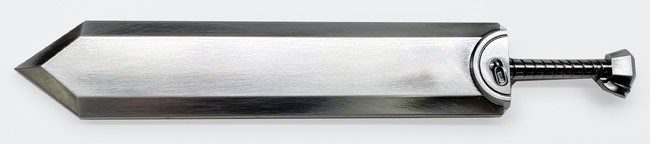
Miura drew the earliest version of the Dragonslayer while he was still a high school student.
While in university, as he was working on a number of projects, Miura released a 48-page prototype called Berserk in Hakusensha’s Monthly ComiComi. The prototype managed to place second in the ComiComi’s seventh Manga School competition which eventually led to Berserk’s official serialization on August 25, 1989, published in Hakusensha’s Monthly Animal House.
The first volume was released on November 26, 1990, under the Jets Comics imprint. From 1992, Monthly Animal House was replaced by Young Animal and Berserk has been continuing to get released in Young Animal since then. As of August 29, 2025, 43 volumes have been released.
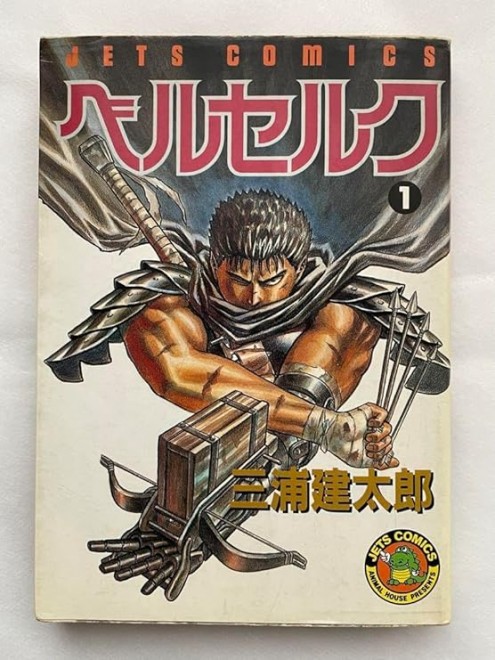
Berserk Volume 1 (C) Kentaro Miura (Studio Gaga), Hakusensha
Sadly, Kentaro Miura passed away on May 6, 2021, at the age of 54. Miura’s last work was chapter 364 of Berserk which was completed by Studio Gaga, and volume 41 was Miura’s last official Berserk release. Starting from volume 42, Berserk has been continued by Studio Gaga under the supervision of Miura’s best friend, Kouji Mori. The continuation of the series has been based on Miura’s memos, handwritten notes and the story outlines which he told to Mori.
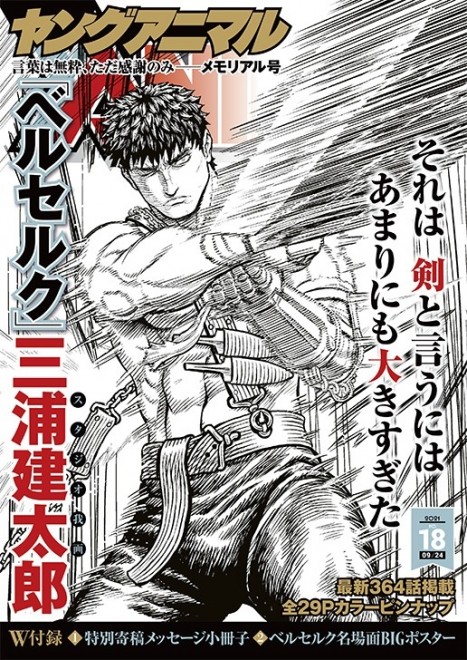
Berserk's last chapter drawn by Kentaro Miura himself. (C) Kentaro Miura (Studio Gaga), Hakusensha

Related News
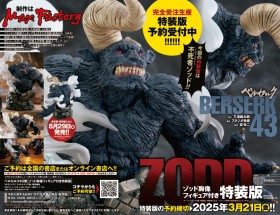
Berserk Volume 43 to Release on August 29! Limited-Edition “Zodd Bust Figure” Set Also Available!
The highly anticipated Volume 43 of the legendary manga Berserk is officially set for release on August 29,...
The world rejoices at the resumption of "Berserk" serialization: "No. 1 manga" and "Let's Go Berserk".
It was announced that the popular manga "Berserk" will resume serialization starting with the 13th issue ...
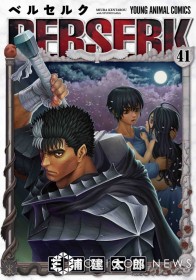
Manga Artist Kentaro Miura, Author of "Berserk" and "Druanki," Dies at 54
Manga artist Kentaro Miura, who wrote the manga "Berserk" and other works, passed away at 2:48 p.m. on May ...
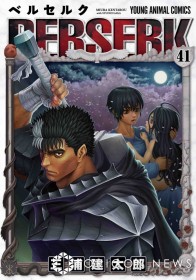
Fans Tear Up at Editor's Long Comment Overflowing with Love for "Berserk". A close friend who knows the story up to the final ...
It was announced that the popular manga "Berserk" will resume serialization starting with the 13th issue ...