[Interview] Kingdom: The Return of the Great General is a Major Hit – A Deep Dive into the Success of Director Shinsuke Sato, Master of Live-Action Adaptations of Manga
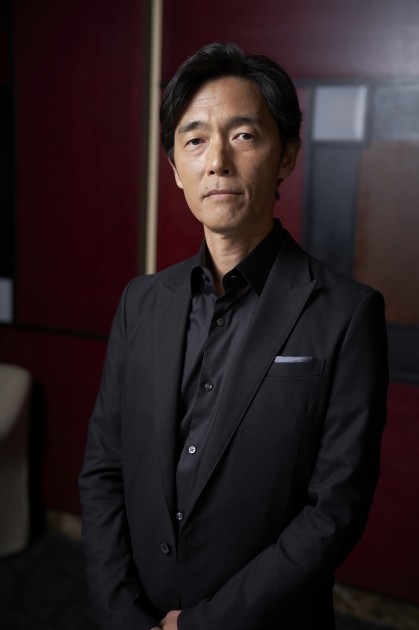
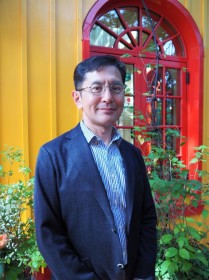
Director Shinsuke Sato (Photo by Natsuki Matsuo) (C) ORICON NewS inc.
–– Since "GANTZ" and "GANTZ: Perfect Answer" (2011), you’ve been involved in several large-scale manga adaptations.
Sato:
After "The Princess Blade," I worked on various projects, including the original sci-fi film "COSMIC RESCUE -The Moonlight Generations-" (2003), starring V6 members Go Morita, Ken Miyake, and Junichi Okada, as well as the live-action adaptation of Hinako Ashihara’s shoujo manga "Sand Chronicles" (2008), for which I served as both director and screenwriter. I also worked on games alongside films, blending genres like sci-fi, action, and everyday stories. In the midst of all this came the offer to direct "GANTZ."
Whenever I tried to pitch an original sci-fi action film set in modern-day Tokyo, I was always told, "The budget’s impossible." But with the offer to direct "GANTZ," a large budget was already prepared, so I eagerly accepted the project. Like with "Kingdom," there was skepticism about whether it could be successfully adapted into live-action. However, I felt that what I had been trying to do with original works was now being offered to me by producers, so it was a perfect opportunity for me.
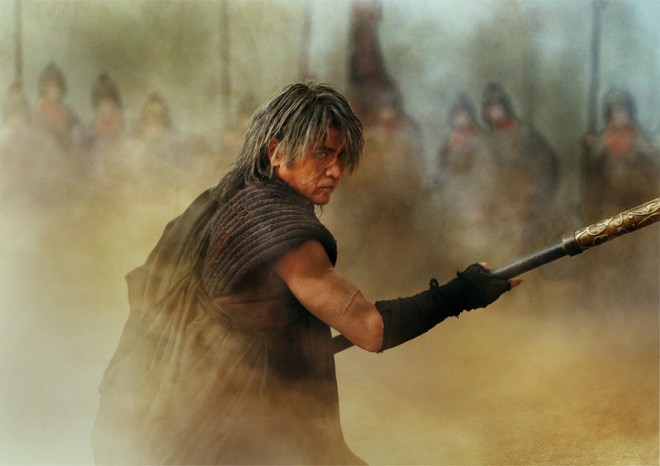
Hou Ken(Koji Kikkawa) (C) Yasuhisa Hara/Shueisha (C) 2024 Kingdom Film Production Committee
–– What do you keep in mind when working on manga adaptations?
Sato:
The original manga serves as a sort of "Bible." It’s about how we interpret it. We aim to capture the appeal of the original work, the elements that draw readers in, and the most exciting parts that we also want to bring to the film. There’s no point in changing the core essence; if you want to change that, you might as well create an original story instead. However, simply copying the original work to create a live-action version can result in a diminished experience. Our goal is to enhance the original through film, expanding on its universe in a way that surprises fans of the manga and also appeals to newcomers who may not be familiar with the source material. I want those who see the movie to be so captivated that they feel compelled to read the original manga.
Before working on "GANTZ," I was very focused on creating original works, but my encounter with this project made me realize that adapting a strong source material can also be incredibly rewarding. I began to see the potential in interpreting and translating the essence of a manga into a cinematic experience.
For example, when I was working on "I Am a Hero," I viewed it as a Western, even though it’s a zombie film. This was my personal interpretation, and I used that perspective to shape the film. Similarly, with "BLEACH," I wanted the climactic battle to take place in a contemporary urban setting, so I filmed it in a station square, which isn’t in the original manga. As the fight progressed, the everyday scenery was gradually destroyed, turning into a wasteland. Most of the station square was CGI before it was destroyed, but many viewers didn’t even notice. This gave me hope that, with the right techniques, it’s possible to create a 360-degree otherworldly experience in Japan, where budget and technology are often limiting factors. This led directly to my work on "Kingdom."
When people said it was "impossible" to adapt "Kingdom," I suggested shooting part of it in China, believing that with a mix of real locations and CGI, much like in "BLEACH," we could successfully bring the world of "Kingdom" to life.
"Kingdom" is a long series, which means there are many different angles and stories that can be told. When I read the first five volumes of the manga, I thought it was like the first "Star Wars" movie (1977's "Episode IV – A New Hope")—an epic adventure story. This was my reinterpretation. A young boy meets a mentor, leaves his village, faces various adversaries, and ultimately reaches the royal palace.
Having a clear vision of the kind of film you want to make is crucial. The manga provides the story and artwork, but it’s up to the filmmakers to determine how to translate that into a two-hour movie.
Sometimes this vision comes easily; other times, it takes longer to develop. But when I find those cinematic elements within the story, I feel confident that we can create something truly special.
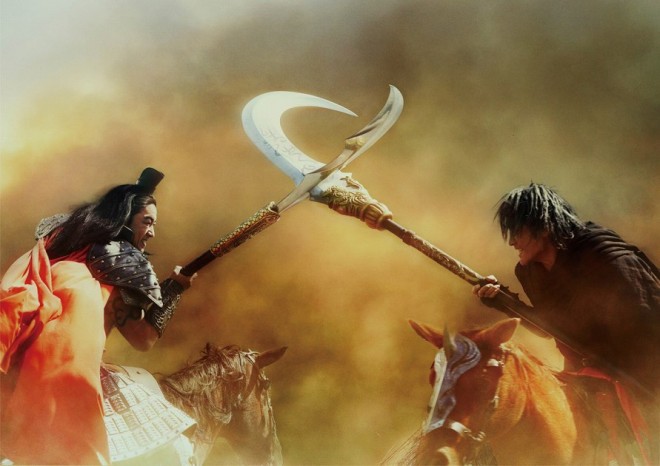
–– The duel scene between Ou Ki and Hou Ken (※Hou with the "Madare ni Ryu" kanji) in "Kingdom: The Return of the Great General" was very much like a Western showdown, wasn’t it?
Sato:
Yes, it was. I might even say that I made the entire "Kingdom" series just so I could film that scene. "The Return of the Great General" is considered the culmination of the series, and it feels like the story that began with Xin, a war orphan, first seeing General Ou Ki at the start of the first movie has now come full circle in this fourth film, where Xin fights alongside Ou Ki’s army, bringing the story to a fitting conclusion.
–– The "Kingdom" series has surpassed 5 billion yen in box office revenue for each of its four films, setting an unprecedented record for a Japanese live-action film series released after 2000. Expectations for a sequel are high, and I imagine you're receiving offers for other projects as well. Is there anything you can share about your future plans?
Sato:
The story of "Kingdom" continues on in the original manga, so if the opportunity arises, I would love to continue with it. This is the first time I've worked on such a long series, and I don’t think opportunities like this come around often. So yes, I absolutely want to see it through as far as we can go.
My long journey that began with the declaration, "I’m going to be a film director!" is still very much in progress. There are so many films that I imagined making as a child that I still haven’t made, and I never feel like I’ve accomplished enough or that my journey is complete. New ideas and things I want to try keep coming up. While I’ve achieved many things in my past works, I’m still driven to create films that will leave audiences astonished. At the same time, I also want to return to making small, everyday stories like the ones I used to create back in my university days.
Source : ORICON NEWS

Related News
[INTERVIEW] "Inside Out 2" Becomes a Global Hit with Relatable Adult Emotions: Interview with the Director & Producer
Director Kelsey Mann and producer Mark Nielsen, who visited Japan in mid-July, expressed their excitement i...
![[INTERVIEW] "Inside Out 2" Becomes a Global Hit with Relatable Adult Emotions: Interview with the Director & Producer](/upimg/thumb/1000/1345/img280/195dac8340d3cba187878afff7a9a94c.jpg)
[Look Back Author Cries] 'Chainsaw Man' Author Brought to Tears by Success of 'Look Back': "I May Never Have Something Made wit...
With the success of the animated film "Look Back" (released on June 28), a thank-you comment from the origi...
![[Look Back Author Cries] 'Chainsaw Man' Author Brought to Tears by Success of 'Look Back': "I May Never Have Something Made with Such Sincerity Again in My Life"](/upimg/thumb/1000/1079/img280/96f8a39ca5aebe5cf7f299f847f18c1d.jpg)
Exclusive Interview: Ghibli's Director Goro Miyazaki's 'The Boy and the Heron' Exhibition: Studio Ghibli Will Continue to Pursu...
At the 77th Cannes International Film Festival held in France in May, Studio Ghibli was awarded the honorar...
【Japan Music Chart】 'Kingdom' Movie Theme Song ONE OK ROCK's 'Delusion' Tops Oricon Charts
ONE OK ROCK's "Delusion " recorded 11,513 downloads in its first week, securing the number one spot in the ...
【5 Photos】 Kingdom: The Return of the Great General Visual Book Released on the 12th, with Some Still Photos Unveiled
The visual book for the latest film in the "Kingdom" series, "Kingdom: The Return of the Great General" (re...
Wes Ball, Director of "Kingdom of the Planet of the Apes," Selected to Helm Live-Action "The Legend of Zelda"
Since its debut in 1968, "Planet of the Apes" has spawned numerous visual works, influencing various fields...

【Manga】 Kagurabachi Vol. 3 Release Praised by 'NARUTO' Author: Japanese Sword Battles are "Something Manga Lovers Will Love"
The third volume of the manga 'Kagurabachi' (Author: Takeru Hokazono) was released on the 4th, and Shueisha...