


[Manga Reviews] Centuria by Tohru Kuramori - Shonen Jump+
Centuria (JP: ケントゥリア ) is a manga that began serialization on Jump+ (known overseas as MANGA Plus) in 2024. It recently earned second place in the Next Manga Award 2024 Web Manga category, drawing well-deserved attention. And though it might sound like I’m saying this after the fact, when I was writing my review of Ordinary Light Music Club last year, Centuria was actually one of my other top contenders at the time.
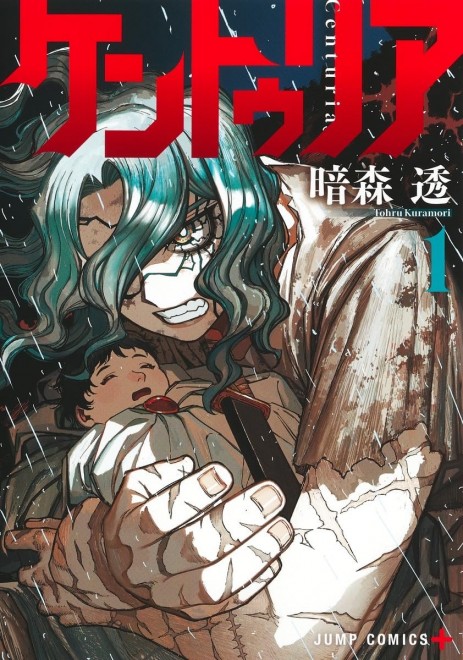
Julian & Diana from Centuria comics vol.1 cover
The series is often called the “Reiwa-era version” of Berserk, a manga revered as the origin and pinnacle of dark fantasy. For context, Japan uses era names such as Heisei or Reiwa to divide time periods. Berserk began serialization in 1989, the first year of the Heisei era, and is considered one of that era’s definitive dark fantasy works.
That said, I personally disagree with calling Centuria “the Reiwa Berserk” or “the next Berserk.” It sets the bar unrealistically high and, frankly, feels unfair to the work itself.
While Berserk is a seinen manga known for its deep portrayal of eroticism and grotesque imagery (Ero guro nansensu), creating a world of raw human emotion and despair, Centuria carries a lighter tone, closer to a shonen-style dark fantasy. It is easier to read but still delivers a deeply layered story. Artistically, instead of Kentaro Miura’s impossibly intricate linework, Centuria opts for bold, dynamic strokes that radiate strength. It is not a “downgraded Berserk.” Rather, it is a different kind of story with a different goal, and it deserves to be evaluated on its own terms.
As of October 2025, 71 chapters have been released. During the Next Manga Award 2025 livestream, one of the editors commented, “There’s a chapter that shook me when I read the storyboard. Readers around the world are going to lose their minds.” Based on recent developments, that probably refers to Chapter 70, a truly emotionally charged episode that is sure to leave readers reeling.
So, let’s dive into what makes Centuria so compelling.
(Minor spoilers ahead for Chapter 1.)
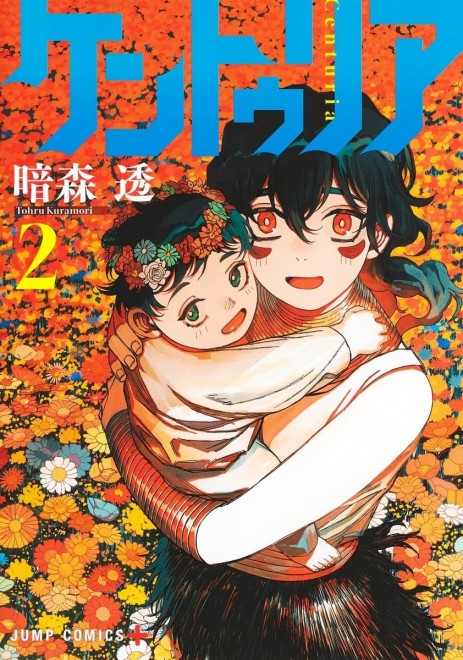
Diana & Titi from Centuria comics vol.2 cover
Centuria Synopsis
The story of Centuria begins when the protagonist, Julian, sneaks aboard a slave ship and is captured as its 101st slave. From the opening scenes, we get the sense that Julian once lived as a servant or perhaps even a slave himself. The first few pages show him attacking a man who appears to be his master and fleeing for his life.
On this ship are the “hundred slaves,” who play a crucial role in the story’s central tragedy. The vessel’s supposed purpose is, of course, to transport slaves for sale. However, the crew harbors a darker motive: they discovered that the insurance payout they receive when slaves die en route is worth more than the profits from selling them alive. Their real plan is to kill the slaves before reaching port and cash in on their deaths.
When the ship enters a certain cursed stretch of ocean, the captain gives the order to slaughter everyone. The slaves are helpless and are mercilessly massacred.
Only Julian and a kind woman named Mira, who had shown him compassion, survive the massacre. Mira is pregnant, and as the last two survivors are cornered by the crew, a monstrous shape begins to rise from the sea—tentacles twisting together until they form the shape of a human.
The creature reveals itself as the Sea God and offers Julian and Mira a deal. Julian tries to sacrifice himself, but Mira stops him. In a moment of desperation, she cuts open her own belly, takes out her unborn child, and entrusts the baby to Julian before throwing herself into the ocean.
Satisfied by this offering, the Sea God bestows its power upon Julian. This gift becomes known as the Strength of a Hundred Lives, the combined souls and power of the one hundred slaves who perished. With this overwhelming might, Julian slaughters every last crew member and escapes the ship. From this moment, the true story of Centuria begins.
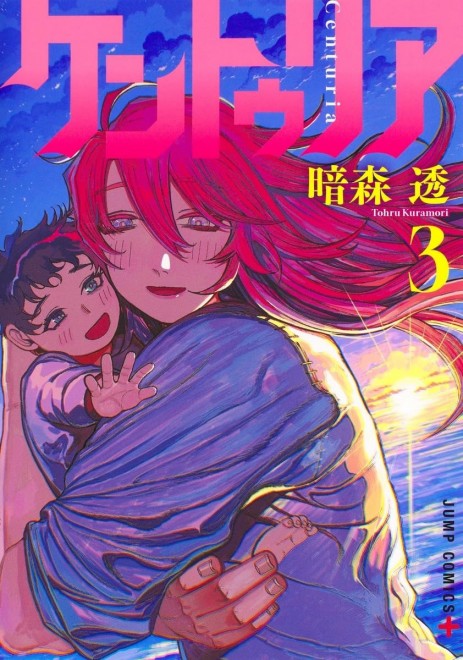
Diana & Angvall from Centuria comics vol.3 cover
Centuria Review
■Characters and the Heart of the Story
The true appeal of Centuria lies in its battles and the emotional depth that runs beneath them. After gaining his power through a deal with the Sea God, Julian finds himself facing a series of formidable enemies, each wielding unique supernatural abilities. Yet what makes these confrontations compelling is not just the action, but the weight of each character’s untold past. Many of the main figures carry hidden histories, and as their lives and connections to Julian unfold, they bring new emotional depth to the story.
In the first chapter, Julian is driven by the selfless love of Mira, who gave her life to save her unborn child. Determined to honor her sacrifice, he sets out to protect the baby, Angvall, as he makes his way to land. There, he meets Titi, and the three of them gradually form a bond that resembles a family. Angvall, now a soldier of the kingdom and a renowned warrior, saves the half-dead Julian, tending to his wounds and giving him food. Their growing relationship adds a warmth and humanity that contrasts beautifully with the series’ dark setting.
Centuria doesn’t just depict battles against monstrous beings. It also portrays confrontations with powerful individuals—royalty, knights, and others who possess extraordinary abilities and ruthless ambitions. The first formidable enemy Julian faces is a monster that dwells deep in the forest, which he helps the villagers defeat. But before long, Arkos, the son of the king and a key figure in the story’s core, enters the scene. Through him, the narrative exposes the chilling cruelty and sinister motives that lurk within those who stand closest to the throne.
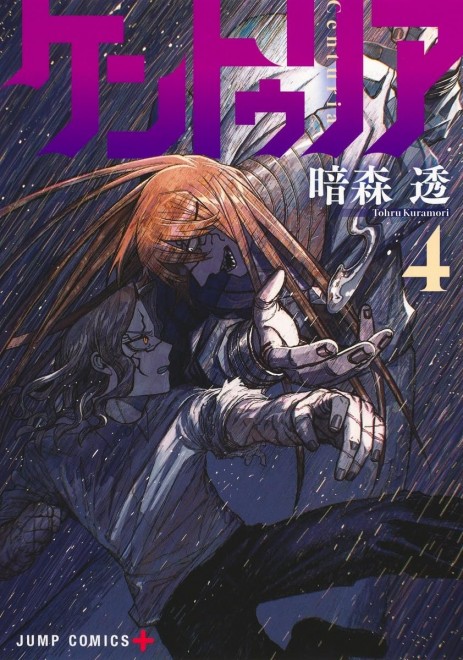
Julian VS Arkos via Centuria comics vol.4 cover
■A Story of Death, Love, and Bonds
Where Berserk embodies despair and loneliness, a relentless struggle against a senseless world, Centuria is defined by hope, love, and the unbreakable bonds that exist even within its curse.
As a true dark fantasy, Centuria is filled with moments of heart-wrenching tragedy. The slave ship prologue symbolizes the hundred souls Julian carries and the burden of their suffering. In what could be called the first major arc, the time he spends with Angvall and Titi, the battles with monsters, and his fateful confrontation with the prince, Julian once again experiences devastating loss.
Later, Diana, the child of Mira, is prophesied by the kingdom’s seer Elstri to bring calamity upon the realm. The vision shown in this scene hints at a deeper, almost cosmic layer to the story’s mythology. It evokes the same sense of eerie grandeur as the appearance of the God Hand in Berserk, an overwhelming premonition that something vast and inevitable is approaching.
The power Julian gains from his contract with the Sea God is more a curse than a blessing. The souls of the hundred slaves live within him, and death itself becomes a central force in the narrative. Even when mortally wounded, Julian miraculously recovers, but it is later revealed that this regeneration comes at the cost of consuming one of those hundred lives. Life and death, sacrifice and survival, these are not just themes in Centuria, they are the story’s beating heart.
Despite the curse he bears, Julian treasures his makeshift family above all else. After fleeing from Elstri’s pursuers, he begins living a quiet, almost ordinary life with Titi and Diana. Along the way, he meets Lukas and Lacrima Balkar, who seeks revenge for her brother Arkos, and their connection slowly grows into something like family. Julian, having once witnessed the selfless love of Mira and Angvall, is no longer driven by hatred alone. He spares those he can forgive, but when someone crosses the line, his fury becomes unstoppable.
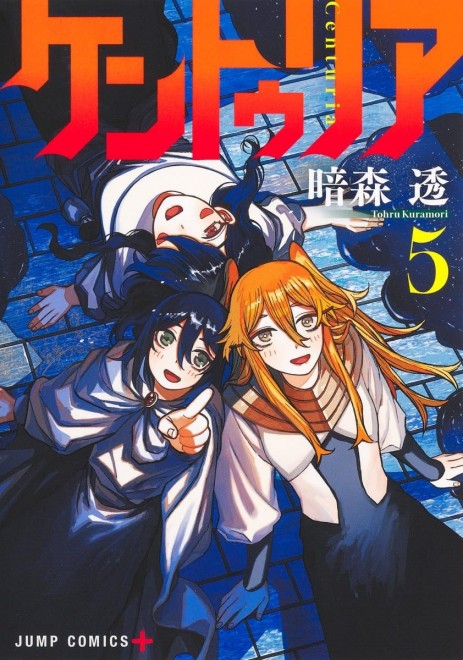
Titi, Diana and Lacrima via Centuria comics vol.5 cover
■The Grand Story Is Still Unfolding
Much about Centuria remains shrouded in mystery.
The king, known as The Supreme Lord, is revered by Angvall and presents himself as a calm and dignified ruler. Yet those around him—his subordinates, his children, and even the queen—harbor their own ambitions and often act with chilling cruelty. The reason this royal household has fallen into such darkness is still unclear, leaving a lingering sense of unease that hangs over every scene.
Lacrima, who once pursued Julian to avenge her brother Arkos, hides secrets of her own. The developments in Chapter 70 are particularly striking and mark a clear turning point for the series. From there, the story begins to move into a new and more complex phase. There are also countless hints and threads scattered throughout: the revelation that Mira had already lost a child before the events of Chapter 1, the hidden burden carried by Julian’s swordsman companion Lukas, and the motives of the assassins targeting Diana and Julian. Each of these mysteries deepens the world of Centuria and promises far more to come.
■Overall Impressions
Centuria is a grand, meticulously crafted dark fantasy in the truest sense. It weaves together tragedy and hope, showing how every choice made by its characters carries immense weight. No one can predict where the story will go from here, but one thing feels certain: Centuria is a work destined to become a long-running epic worth following closely.
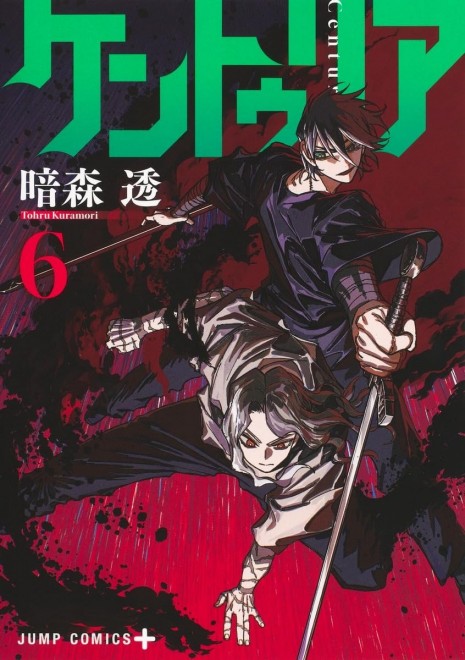
Julian & Lukas via Centuria comics vol.6 cover
Author: Tohru Kuramori
Centuria marks the debut serialization of Tohru Kuramori, a rising manga artist whose name has quickly gained attention in the world of dark fantasy storytelling. In 2018, Kuramori won the Excellence Award at the 41st Evening Newcomer Manga Award for the short story The Song of Dawn. Beginning around 2019, several of Kuramori’s one-shots appeared on Jump+, including Girl Knuckle Girl, Immortal Mizar, KILLER PARENT, and Earth Recording 0001, officially launching the artist’s professional career.
Before starting Centuria, Kuramori trained as an assistant under several well-known creators. One of them was Tatsuki Fujimoto, the creator of Chainsaw Man. Kuramori participated as part of the Chainsaw Man production team, and Fujimoto himself praised Centuria on the wraparound band of Volume 2, writing:
“Superb draftsmanship, serious tone, pure fantasy. The monster designs are top-notch!”
Kuramori also worked alongside Yukinobu Tatsu, the creator of Dandadan. However, their connection was less that of a traditional mentor and more as peers and collaborators who once shared the same assistant circle under Fujimoto. Tatsu later contributed a comment for Centuria Volume 3, further reflecting the mutual respect among this new generation of manga artists.

Related News
[Manga Reviews] The Days of Diamond by Ohashi Hirai - Weekly Young Jump
The Days of Diamond (by Ohashi Hirai) is a Japanese manga in Weekly Young Jump from Feb 2022.
![[Manga Reviews] The Days of Diamond by Ohashi Hirai - Weekly Young Jump](/upimg/thumb/1000/1767/img280/7aa90657789a5077346fd5944c8ac08d.jpg)
[Manga Reviews] Thunder 3 by Yuki Ikeda - Monthly Shonen Magazine
Thunder 3 (by Yuki Ikeda) is a Japanese manga in Monthly Shonen Magazine from Jun 2022.
![[Manga Reviews] Thunder 3 by Yuki Ikeda - Monthly Shonen Magazine](/upimg/thumb/1000/1693/img280/bee8328b763eb1d9d48c1b501d034cc6.jpg)
[Manga Reviews] Versus by ONE, Ktotaro Azuma, bose - Monthly Shonen Sirius
Versus (by ONE) is a Japanese manga in Monthly Shonen Sirius from Novenber 2022.
![[Manga Reviews] Versus by ONE, Ktotaro Azuma, bose - Monthly Shonen Sirius](/upimg/thumb/1000/1586/img280/e23a54d853a32376c3c374bc1c4cbe89.jpg)
[Manga Reviews] Girl Meets Rock! by Kuwahari, Tetsuo Ideuchi - Shonen Jump+
Girl Meets Rock! (by Kuwahari) is a Japanese manga in Shonen Jump+ from January 2024. This Manga is a high ...
![[Manga Reviews] Girl Meets Rock! by Kuwahari, Tetsuo Ideuchi - Shonen Jump+](/upimg/thumb/1000/1527/img280/c64a3af91c91ebb4af913d2a01907478.jpg)
[Manga Reviews] MAD by Yusuke Otori - Shonen Jump+
MAD (by Yusuke Otori) is a Japanese manga in Shonen Jump+ from June 2024. After a mysterious alien invasion...
![[Manga Reviews] MAD by Yusuke Otori - Shonen Jump+](/upimg/thumb/1000/1445/img280/3dc5450c0443a3eb8e3c4733e560f2ec.jpg)