


KADOKAWA Tackles Global Manga Talent Shortage with the “Wordless World Manga Contest” — “Inspiration Can Begin Anywhere”
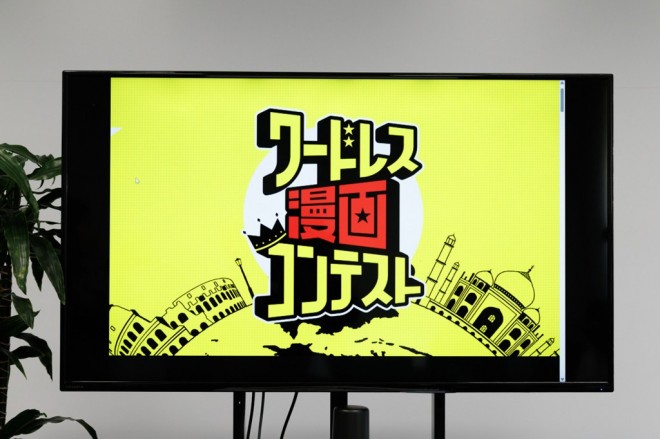
KADOKAWA’s Wordless World Manga Contest, a competition transcending language barriers, drew 1,126 entries from 104 countries and regions, with eight winners selected. The winning works are now available on the official website. As the contest does not rely on dialogue or text, the results are judged purely on artistic skill — and the quality is remarkably high. KADOKAWA, the organizer, feels they have gained significant momentum. But what prompted the decision to recruit “artists capable of creating manga” from around the world? We spoke to the contest planners to find out.
Manuscript Submissions Pile Up in Certain Editorial Departments, with Fierce Competition on Social Media — “Right Now, There Simply Aren’t Enough Manga Artists to Keep Up”
.jpg)
Award-winning works from the Wordless Manga Contest (Manga manuscript)
“There aren’t enough manga artists to keep up with demand.”
Across the globe, countless young people dream of making their manga debut in Japan, the birthplace of the medium. The overwhelming response to KADOKAWA’s global Wordless World Manga Contest proves that this belief is no mere rumor. Despite being the first contest of its kind, it attracted submissions from countries as far away as those in Africa — a testament to the worldwide reach of Japanese manga.
However, the decision to create a borderless, language-free manga contest was also driven by a pressing reality: the domestic manga industry’s shortage of talent.
“With the spread of digital comics, the number of manga titles released has skyrocketed compared to the past. But the number of manga artists hasn’t kept pace, making the discovery of promising newcomers an urgent task for editorial departments,” says Risa Tomisaki of KADOKAWA’s Global eBook Office and Overseas Manga Editorial Department.
Japan’s declining population makes it unrealistic to scout only domestically. Submissions and pitches tend to be concentrated in a few popular editorial departments, like Weekly Shonen Jump. On social media, talented illustrators are often already under exclusive agreements with other companies. Many editors lament the increasing difficulty of finding new talent.
“One of the biggest shortages is in artists for comicalization. There’s no lack of original works, particularly in light novel and isekai genres, but there’s an overwhelming shortage of manga artists to adapt them. Companies are fiercely competing for the few available talents. Just joining the race doesn’t solve the problem — it doesn’t increase the talent pool. Discovering and training future hitmakers is an essential mission for editors. That’s why we turned our attention to aspiring overseas manga artists, an area that’s still a blue ocean,” says Noboru Segawa, Head of KADOKAWA’s Global Comic Department and Overseas Manga Editorial Department, and Executive Producer of IP Development.
Initially, the main goal of the Wordless Manga Contest was to scout overseas artists with strong drawing skills who could be tapped for comicalization projects. “We expected that skilled artists would apply. But what surprised us was the abundance of works with not only impressive illustration quality but also compelling manga storytelling, including panel layouts and composition. That was a very pleasant surprise,” says Tomisaki.
From Dynamic Battle Manga to Delicate Shōjo Tales of Emotion — “A Glimpse into Each Country’s Cultural Background and Worldview”
.jpg)
Award-winning works from the Wordless Manga Contest
The eight winning works are available to read for free on the contest’s official website. All are unmistakably manga, not just comics.
“While these works are influenced by Japanese manga, they also reflect each creator’s cultural background, education, and worldview. For example, the silver award winner in the Original category, Heartsteel by Indian artist masterlynx, is a sci-fi piece praised for its charming female characters, intricately designed robots, detailed backgrounds, and dynamic battle scenes. What impressed me most was the choice of sci-fi as a genre — it’s less common in Japanese manga contests, likely due to its complexity in both visuals and story structure. The work also reflects India’s profile as an IT powerhouse,” Segawa notes.

Meeting scene between Indian creator masterlynx and an editor
Masterlynx cites Dragon Ball and One-Punch Man as personal favorites. “Many entries leaned not just toward Japanese manga generally, but specifically toward works in Shonen Jump,” recalls Segawa.

Taiwanese artist Shizu (left) and her assigned editor being interviewed.
Conversely, some winners conveyed a sense of traditional Japanese aesthetics. The bronze award winner in the Original category, No Rain, No Rainbow by Taiwanese artist Shizu, depicts changes in a character’s emotions through transformations of water — rain, puddles, ice, rainbows — in a fantastical way. The piece excelled in expressing emotion, a key element in Japanese manga storytelling, and was praised as having the potential to adapt fantasy novels into manga. “The delicate portrayal of emotion through use of space and timing felt closer to Japanese sensibilities. Discovering overseas artists with this kind of talent was another major achievement of the contest,” says Segawa.
“A Global Editorial Team as a Launchpad for the World’s MANGA Culture” — KADOKAWA’s New Challenge

Winners of the “Wordless World Manga Contest”
The eight winners are now working with assigned editors in preparation for their debuts, following Japan’s traditional manga production model where editors and creators work closely together. The roadmap is for them to debut within a year in KADOKAWA’s comic imprints.
“We’re committed to helping them realize their dreams of debuting in Japan, using our editorial expertise. But the spark doesn’t have to start in Japan. With Japan’s aging population, creating manga solely for Japanese audiences — especially younger demographics — is commercially challenging. In contrast, many Southeast Asian countries have populations where over 50% are young people, making them viable markets for youth-oriented works. Expanding beyond Japan widens our genre and target options,” Segawa explains.
KADOKAWA currently has 19 overseas offices, mainly in Europe, North America, and Southeast Asia, many with publishing capabilities, enabling them to deliver works worldwide. “Long-term, we plan to establish development-focused editorial teams at these overseas offices. By connecting them in a borderless network and overcoming language barriers, we aim to create a global editorial infrastructure within a few years,” says Segawa.
As a first step, KADOKAWA launched the Overseas Manga Editorial Department in July, evolving from the Wordless Manga Contest framework. This department will develop works with the winners and provide ongoing support. “It’s wonderful that the winners respect Japanese manga, but we hope they will also create works aimed at global audiences. If a global hit emerges, it will positively advance MANGA culture worldwide. We want our Overseas Manga Editorial Department — and eventually our global editorial network — to be a launchpad for this, deepening communication with talented creators around the world,” Segawa concludes.
(Interview Japanese text by Sumiko Kodama / Translation by Satoru Shoji)
▼「ワードレス漫画コンテスト」公式サイト
JP:https://wordlessmanga.com/
EN:https://wordlessmanga.com/eng.html
Source : ORICON NEWS

Related News
[English Translation] KADOKAWA Announces Groundbreaking Policy Allowing YouTube Use of Anime Clips and Commentary
KADOKAWA allows legal use of anime clips and commentary on YouTube for four new titles from July 2025, incl...
![[English Translation] KADOKAWA Announces Groundbreaking Policy Allowing YouTube Use of Anime Clips and Commentary](/upimg/thumb/5000/5546/img280/KADOKAWA-YouTube-Clips-Guidelines-1.jpg)
KADOKAWA Acquires Italy’s Leading Publisher Edizioni BD to Accelerate European Manga Expansion
KADOKAWA has officially entered into an agreement to acquire Edizioni BD S.r.l., one of Italy’s leading pub...
KADOKAWA Expands Anime Production Network by Acquiring Chiptune After Doga Kobo
On February 17, KADOKAWA announced its acquisition of shares in Chiptune, an anime production company speci...
KADOKAWA and Sony Forge Strategic Capital and Business Alliance
KADOKAWA and Sony Group announced on December 19 that they have entered into a strategic capital and busine...
[Editor’s Picks] Crunchyroll Launches Manga App as Sony-KADOKAWA Alliance Unveils New Vision for Japanese Entertainment
On January 7, 2025, Crunchyroll, a subsidiary of Sony Group, announced the launch of its new manga app, "Cr...
![[Editor’s Picks] Crunchyroll Launches Manga App as Sony-KADOKAWA Alliance Unveils New Vision for Japanese Entertainment](/upimg/thumb/3000/3084/img280/CR_Manga_001.jpg)