Japan Actors Union Responds to Kenjiro Tsuda TikTok Ruling, Calls Recognition of Voice Publicity Rights a “Major Achievement”
The Japan Actors Union issued a statement on October 5 following a Tokyo District Court ruling in a case brought by voice actor Kenjiro Tsuda over TikTok videos that allegedly used generative AI to imitate his voice without permission. Although the court rejected his request to have the videos removed because they had already been deleted, the ruling indicated that a person's voice can fall within the scope of protection under the right of publicity.
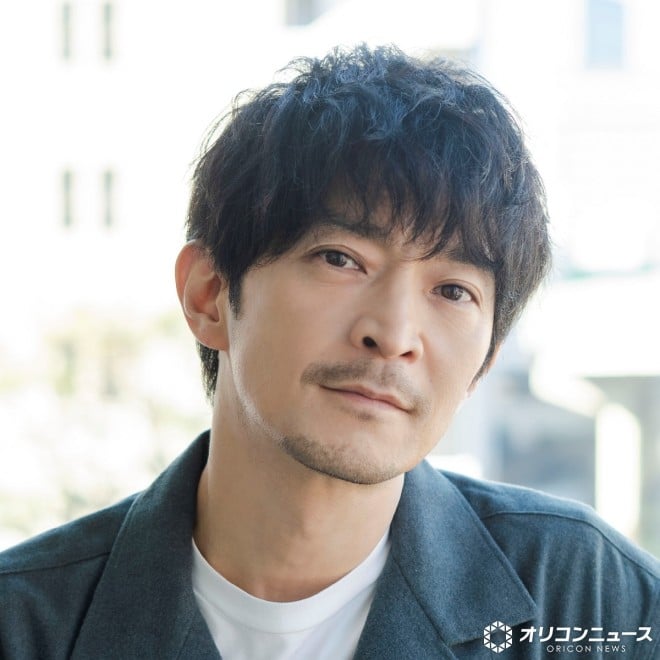
Kenjiro Tsuda photo by Ruka Ueno © ORICON NewS inc.
Quick Summary
- Kenjiro Tsuda sought the removal of TikTok videos that allegedly used AI-generated narration imitating his voice without permission.
- The Tokyo District Court rejected the removal request on September 30 because the account and videos had already been deleted.
- The ruling nevertheless indicated that a person's voice can be protected under the right of publicity.
- The Japan Actors Union described that recognition as a “major achievement” and called for clearer legal protection for performers.
- JVOXPRO testing reported an average voice similarity score of 0.814 across comparisons involving Tsuda and the AI-generated audio.
Court Rejects Removal Request but Addresses Publicity Rights in Voice
The Tokyo District Court issued its ruling on September 30 in a case brought by voice actor Kenjiro Tsuda against the company operating TikTok over videos that allegedly used generative AI to imitate his voice without permission.
According to the complaint, an unidentified person posted 188 videos between July 2024 and September 2025 through a specific account, adding narration that imitated Tsuda's vocal qualities to videos about urban legends, trivia and other subjects.
The complaint stated that because TikTok has a system that pays creators according to video views, the account was earning between 500,000 and 750,000 yen per month.
Tsuda's side sought the removal of the videos and argued, among other points, that the use of his voice infringed his right of publicity.
The Tokyo District Court rejected the removal request because the videos had already been deleted. At the same time, however, the ruling indicated that a person's voice is included within the scope of interests that may be protected by the right of publicity.
Japan Actors Union Calls the Ruling a “Major Achievement”
Following the ruling, the Japan Actors Union issued a statement through its official website and X account on October 5.
The union said it regarded the court's recognition of publicity-right protection for a person's voice as “a major achievement.”
It added that it would continue developing guidelines aimed at protecting performers' rights in connection with generative AI and would seek the legal reforms it considers necessary.
On its official website, the union explained that Tsuda's request for removal had been rejected because the poster deleted the account and videos before the judgment, meaning the court considered the purpose of the lawsuit to have been lost.
The union nevertheless emphasized that the case had achieved the practical goal of removing the videos while also obtaining a judicial finding that voice can fall within the scope of protection under the right of publicity.
It expressed respect for Tsuda and the staff who supported the legal action.
Lawsuit Focused on Removing the Videos Rather Than Damages
The Japan Actors Union noted that Tsuda's lawsuit was not primarily aimed at obtaining monetary damages.
Instead, the action focused on removing videos that used a voice imitating his own, which the union described as an effort to protect personal rights connected to his voice.
The union said the ruling raised a number of broader questions involving generative AI, voice identification, publicity rights, platform responsibilities and systems that reward creators based on view counts.
JVOXPRO Reports High Similarity Scores in Voice Tests
The Japan Actors Union also reported results from JVOXPRO, a performer database established by the organization, which includes a voice similarity assessment tool.
According to the union, the tool has been tested using a range of audio comparisons involving the same person, different people and voices with similar characteristics. Tests have also covered different file sizes and formats including MP3, M4A and WAV.
Based on those tests, JVOXPRO uses four similarity ranges:
0.90 or higher: Very high possibility that the voices are from the same person
0.80 to below 0.90: High possibility that the voice is either the person or an AI-generated voice based on that person
0.74 to below 0.80: Requires further verification
Below 0.74: High possibility that the voice belongs to another person
Tsuda Voice Comparison Recorded Maximum Score of 0.881
Using JVOXPRO's similarity assessment function, the union compared audio of Kenjiro Tsuda with files used by Hakkai, a poster who used the name “Yummy.”
The maximum similarity score recorded was 0.881.
A total of 30 test cases were conducted comparing Tsuda's voice with the AI-generated audio used by Hakkai, and more than 15 produced scores of 0.80 or higher.
The average similarity score across the tests was 0.814, placing it in JVOXPRO's 0.80-to-below-0.90 category.
Under the system's criteria, that range is evaluated as indicating a high possibility that the audio is either the person's own voice or an AI-generated version of that person's voice.
Based on those results, the union concluded that there was a high possibility that the AI-generated audio used by Hakkai was based on Tsuda's voice.
Union Raises Limits of Current Voice Identification Technology
The Japan Actors Union also cautioned that voice identification remains a technical challenge.
It said that unless identification can reach 100 percent certainty, the identification itself could become a point of dispute in litigation.
The union argued that this risk could make legal action more difficult and potentially allow unlawful conduct to continue.
At the same time, it said technology is increasingly able to distinguish whether a sample is an AI-generated product, and expressed expectations for further technical development.
Union Argues a Voice's Ability to Attract Audiences Should Be Considered
The union also addressed the question of whether unauthorized use of a performer's voice takes advantage of that person's ability to attract audiences.
It noted that one theory concerning the voices of famous people requires a sufficient level of recognition for listeners to connect a particular voice with the person's name.
The union argued, however, that greater emphasis should be placed on whether the voice itself motivates people to watch or make purchases, describing this as its “customer-attracting power.”
It stated that Tsuda's voice itself had strong audience appeal and that the videos had recorded extremely large numbers of views.
The union warned that focusing only on whether a person meets a general standard of fame may fail to capture the economic value associated with a particular voice.
Japan Actors Union Calls for Clearer Legal Protection of Voice
The union highlighted the fact that existing statute does not expressly state that “voice” is included in the right of publicity.
It said the court's finding that voice can fall within the scope of publicity-right protection should be used as a basis for pursuing clearer legislation concerning performers' publicity rights.
The union also raised concerns about the current level of copyright protection available to actors and voice actors as the use of generative AI continues to expand.
Platform Data Preservation and Disclosure Also Raised as an Issue
Another issue identified by the union concerns how online platforms respond when they are notified of alleged rights violations.
The union argued that if platforms were required to immediately preserve and disclose relevant information after receiving a request for identifying information about a poster, it might have been possible to identify the person responsible in this case.
It also pointed to the sequence in which the initial disclosure request was rejected by the platform and the account was then deleted shortly after litigation was filed.
The union said stronger systems requiring platforms to preserve and disclose information could improve transparency on the internet.
View-Based Monetization Systems Come Under Scrutiny
The Japan Actors Union also questioned systems used by user-generated content platforms that pay creators based on viewing figures.
It argued that the issue extends beyond the alleged unauthorized use of Tsuda's voice, pointing to cases in which people can earn substantial income by posting pirated copies of other people's copyrighted works.
The union said rights holders can suffer significant losses from such activity and called for the responsibilities of platforms that financially incentivize posting to be examined from an international perspective.
Union Plans Generative AI Guidelines and Push for Legislation
In its concluding remarks, the Japan Actors Union said the use of generative AI is advancing even though the necessary technological and legal environment remains insufficient.
It also argued that copyright protection for actors and voice actors remains inadequate.
The union referred to Article 30-4 of the Copyright Act, Article 91, Paragraph 2, and the lack of a reproduction right for performers as examples of what it considers gaps in the current legal framework.
It said these shortcomings in legal protection for performers have persisted since the current Copyright Act was established in 1970.
Going forward, the union said it intends to continue advocating for appropriate protection of performers' rights. For the use of generative AI, it plans to develop private-sector guidelines ahead of government action while urging lawmakers to establish clearer legal protections.
FAQ
Q1. What was Kenjiro Tsuda's TikTok lawsuit about?
A1. Tsuda sought the removal of videos that allegedly used generative AI to imitate his voice without permission and argued that the use of his voice implicated his right of publicity.
Q2. What did the Tokyo District Court decide?
A2. The court rejected the removal request because the videos had already been deleted, while also indicating that a person's voice can fall within the scope of protection under the right of publicity.
Q3. Why did the Japan Actors Union call the ruling a major achievement?
A3. The union said the case resulted in the videos being removed and, separately, produced a judicial finding recognizing voice as potentially protected under the right of publicity.
Q4. What did JVOXPRO find in its comparison of Tsuda's voice and the AI audio?
A4. Across 30 test cases, the highest similarity score was 0.881 and the average was 0.814, a range JVOXPRO classifies as indicating a high possibility of the person or an AI-generated version of that person's voice.
Q5. What does the Japan Actors Union plan to do next?
A5. The union says it will continue developing guidelines for the use of generative AI, seek clearer legal protection for performers and call for reforms concerning platform responsibilities and performers' rights.
津田健次郎さん TikTok裁判判決を受けて 「声」のパブリシティ権保護を司法が認めた点は、大きな成果と受け止めています。 日俳連は、今後とも生成AIをめぐる課題に対し、実演家の権利を守るガイドラインの策定を進め、必要な法整備を求めてまいります。 ▼詳細はこちら▼ https://t.co/b5XqxsHJgH
— 日本俳優連合(JAU / 日俳連)公式 (@JAU_Official) October 5, 2026
Source : ORICON NEWS

Related News
Kenjiro Tsuda Opens First Official Fan Club, Announced on His Birthday: “A Glimpse of What Happens on Set”
Kenjiro Tsuda will open his first official fan club, Tsudaken Club, with its grand opening set for 12:00 p....
Voice Actor Kenjiro Tsuda’s Voice Allegedly Imitated Without Permission by Generative AI: Lawsuit Filed Against TikTok, Japan A...
The Japan Actors Union, also known as JAU or Nippairen, updated its official X account on May 25 and issued...
Kenjiro Tsuda Shyly Laughs About New Photobook “It’s Embarrassing” and Reveals He Once Turned It Down “I’m Already Over 50…”
Kenjiro Tsuda marked the release of his new photobook while candidly admitting he felt embarrassed about be...
Kenjiro Tsuda Marks 30 Years as a Voice Actor at 54 with Commemorative Photobook Releasing in March, Jakarta Location Shoot Rev...
Kenjiro Tsuda, one of Japan’s most acclaimed voice actors, celebrates 30 years of voice acting with the rel...