Disney and Pixar’s When I Become a Beaver Explores Division and Hope Through “TANAKA” Family Theme
Disney and Pixar’s When I Become a Beaver presents a story about coexistence between humans and nature through a fictional premise in which a college student enters the animal world. Directed and written by Daniel Chong and produced by Nicole Paradis Grindle, the film centers on environmental conflict, generational dialogue, and the question of how individuals can make their voices heard in a divided society.
Quick Summary
・When I Become a Beaver follows Mabel, a college student who chooses to become a beaver to protect a forest tied to her memories, entering an unfamiliar animal society.
・Director Daniel Chong drew from his upbringing in Orange County, California, where Japanese American communities influenced the inclusion of a “TANAKA” family background.
・The film’s core idea stems from beavers creating ecosystems through their dams, shaping the story’s central metaphor about building environments.
・Themes include environmental conflict, generational dialogue, and how individuals can communicate their views in modern society.
・The film has grossed over $240 million worldwide, with strong box office performance continuing in Japan.
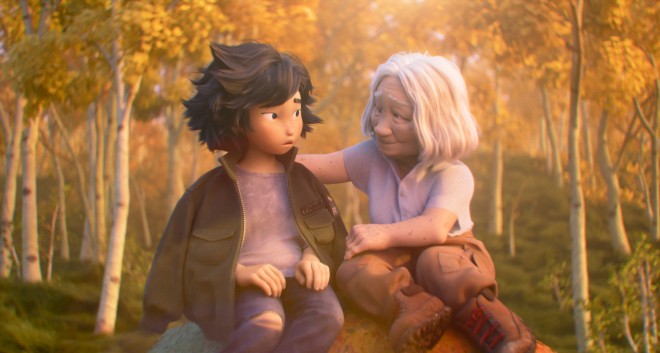
A scene from Disney and Pixar’s When I Become a Beaver, now in theaters. (C)2026 Disney/Pixar. All Rights Reserved.
What Is When I Become a Beaver About?
The film follows Mabel, a college student who loves animals and makes the bold decision to “become a beaver” in order to protect a forest filled with personal memories.
Retaining her human consciousness, she enters the animal world and faces an environment where human logic does not apply, as she works on a plan to protect the forest.

Daniel Chong, director of When I Become a Beaver.

Producer Nicole Paradis Grindle of When I Become a Beaver during an interview
Why Does the Grandmother Have the Name “TANAKA” in When I Become a Beaver?
Daniel Chong explained that the name “TANAKA” reflects his own background and experiences.
“I grew up in Orange County, California, where there was a Japanese community nearby. Many of my friends were third- or fourth-generation Japanese Americans, and I remember that their grandparents had often lived in the United States for a long time or were born there, speaking English without accents. I wanted to depict a relationship between a grandmother and grandchild in a film. It’s something I hadn’t really seen before, and it comes directly from my own background.”
Nicole Paradis Grindle added that many Japanese American and Asian American creators were involved in the production.
“Starting with production designer Bryn Imagire, many members of our team had lived in the United States for generations and identified themselves as American. Portraying Asian Americans, who have not always been fully represented, was a meaningful choice for us.”
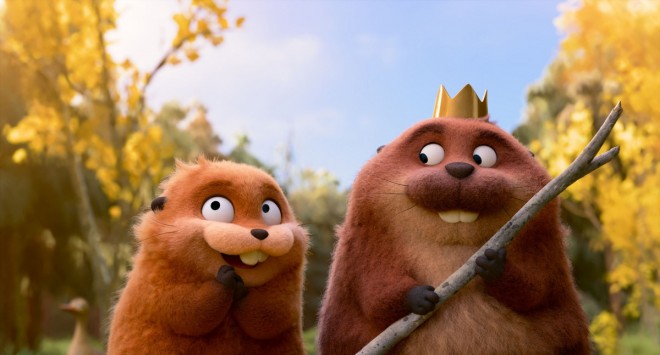
A scene from Disney and Pixar’s When I Become a Beaver, now in theaters. (C)2026 Disney/Pixar. All Rights Reserved.
How Did Beaver Ecology Shape When I Become a Beaver?
The filmmakers conducted extensive research on beavers.
Nicole Paradis Grindle said she was surprised that it is difficult to distinguish males and females based on appearance. Daniel Chong pointed to a discovery that became central to the story.
“Beavers create ponds for their own homes, but in doing so, they create ecosystems for other animals. They are creatures that ‘create’ environments. This idea became the foundation of the story.”
Grindle emphasized that this concept serves as the film’s central metaphor.
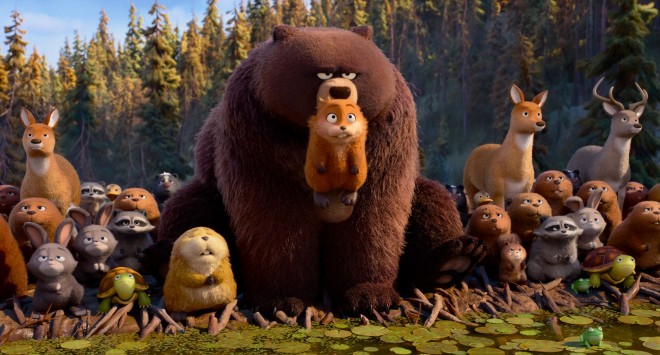
A scene from Disney and Pixar’s When I Become a Beaver, now in theaters. (C)2026 Disney/Pixar. All Rights Reserved.
How Does When I Become a Beaver Reflect Modern Society?
The film depicts conflict between development and environmental protection through a highway construction project, while showing the protagonist continuing to raise her voice.
Nicole Paradis Grindle noted that this reflects the situation of today’s younger generation.
“Young people today see the world from different perspectives and have new ideas about how to solve problems. At the same time, many may feel that their voices will not be heard. In a society where environmental destruction and political conflict are intense, there are many who have clear opinions but are unsure how to express them.”
The story also portrays dialogue between people in different positions, including young individuals and politicians.
“Mabel cannot express her thoughts well at first, but through the story she learns how to bridge that gap. On the other hand, Mayor Jerry, who represents the older generation, must also find ways to listen to citizens. We believed it was important to depict people coming together across generations and positions to solve problems.”
Grindle added:
“One question that is often forgotten in modern society is how we listen to each other across differences. That is one of the most important themes we wanted to convey.”
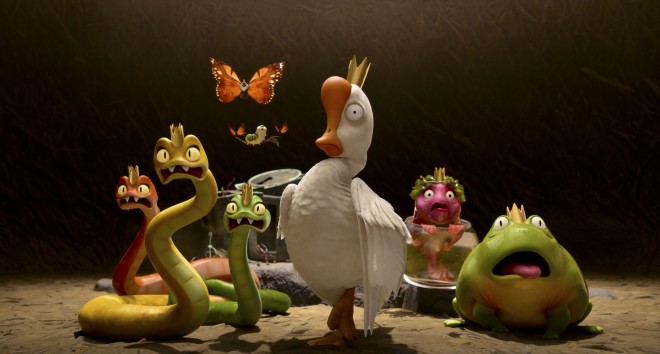
A scene from Disney and Pixar’s When I Become a Beaver, now in theaters. (C)2026 Disney/Pixar. All Rights Reserved.
Why Does When I Become a Beaver Avoid Villains?
Daniel Chong highlighted that the film does not portray anyone as a villain.
“This film includes a grandmother, young people, teachers, politicians, and animals—various perspectives. Regardless of age, I hope everyone can find themselves in the story. That’s why this is not a story about making someone a villain. Everyone has their own sense of what is right. What matters is how we connect.”
He also emphasized that humans and animals share the same planet and are part of the same ecosystem.
“The core of the film is how we remember that humans are also part of the ecosystem, and how we understand that we are in relationships where we share responsibility.”
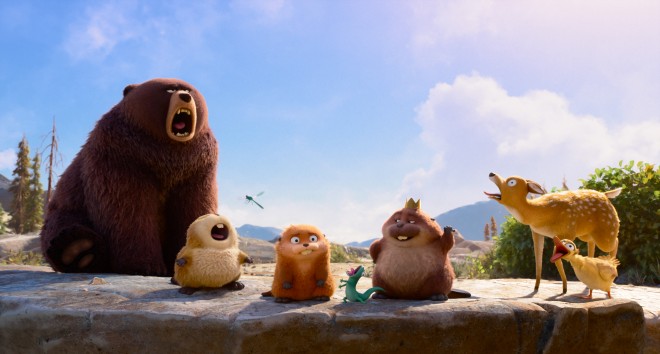
A scene from Disney and Pixar’s When I Become a Beaver, now in theaters. (C)2026 Disney/Pixar. All Rights Reserved.
How Did Studio Ghibli Influence When I Become a Beaver?
Daniel Chong cited Isao Takahata’s Pom Poko (1994) as an influence.
“When I first watched it, I was unsure how to take its unique structure. But while developing this film, I realized that what I was trying to do might be closely connected to what Takahata was doing in Pom Poko. Watching it again, I found many elements that resonated more strongly with me now.”
He noted that themes such as human impact on nature and how nature responds became clearer and helped shape the core idea of the film.
He also mentioned My Neighbor Totoro (1988), describing it as a “magical work” filled with respect for nature and observations of childhood.
Nicole Paradis Grindle referred to Kiki’s Delivery Service (1989), commenting that Kiki’s journey of growth while searching for her place resembles Mabel’s story.
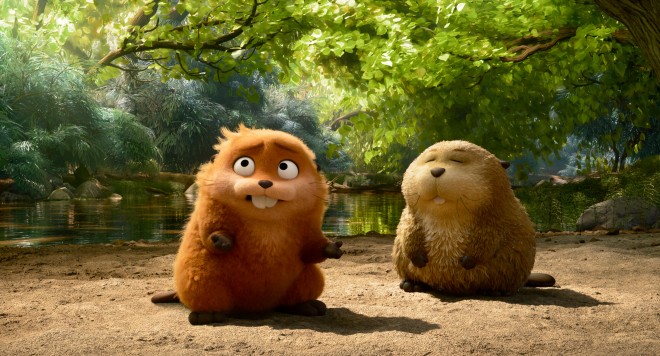
A scene from Disney and Pixar’s When I Become a Beaver, now in theaters. (C)2026 Disney/Pixar. All Rights Reserved.
Message to Japanese Audiences
Asked for a message to audiences in Japan, Daniel Chong said:
“I would be happy if people could laugh, enjoy the film, and feel a connection with someone. That alone gives the film value.”
He added that he hopes the film encourages viewers to think about relationships with nature, animals, and others.
Nicole Paradis Grindle said with a smile that she hopes audiences will come to like beavers and feel a sense of connection with the world.
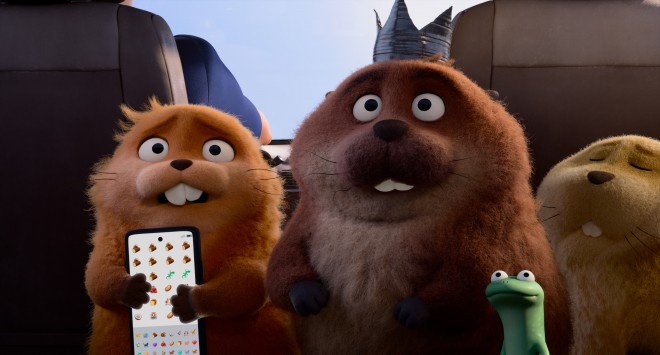
A scene from Disney and Pixar’s When I Become a Beaver, now in theaters. (C)2026 Disney/Pixar. All Rights Reserved.
Box Office Performance of When I Become a Beaver
Released on March 6 in the United States and other countries, the film has received strong evaluations and surpassed $240 million in global box office revenue.
In Japan, during its second weekend from March 20 to 22, it recorded 381.72 million yen in revenue and 283,943 admissions. This represents 107% of the previous weekend.
After 10 days, the cumulative total reached 962.35 million yen in revenue and 713,626 admissions, with expectations for a long-running hit driven by word of mouth.
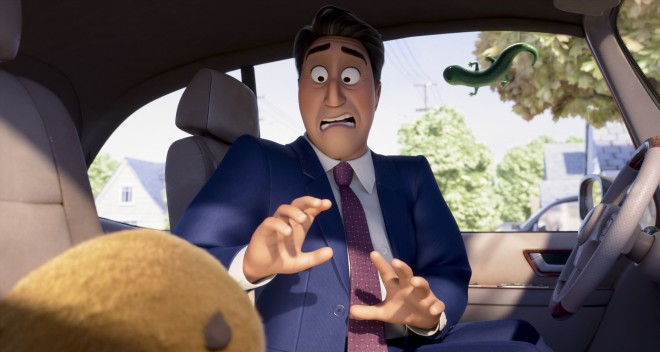
A scene from Disney and Pixar’s When I Become a Beaver, now in theaters. (C)2026 Disney/Pixar. All Rights Reserved.
FAQ
Q1. What is When I Become a Beaver about?
It follows Mabel, a college student who becomes a beaver to protect a forest. She enters the animal world while retaining human consciousness and works to defend the environment.
Q2. Why is the name “TANAKA” used in the film?
Director Daniel Chong based it on his experiences with Japanese American communities in Orange County, reflecting multigenerational families and relationships rarely depicted in film.
Q3. What message does the film convey?
The film focuses on coexistence, emphasizing communication across generations and perspectives, as well as recognizing humans as part of a shared ecosystem.
Q4. How successful is the film commercially?
The film has surpassed $240 million in global box office revenue. In Japan, it recorded strong attendance and revenue growth during its second week.
Q5. What inspired the film’s themes?
The creators referenced beaver ecology and Studio Ghibli works such as Pom Poko, My Neighbor Totoro, and Kiki’s Delivery Service.
Source : ORICON NEWS

Related News
UNIQLO UT Launches “MAGIC FOR ALL ICONS” Collection Featuring Disney, Pixar, Star Wars, and Marvel Characters
UNIQLO UT introduces a new graphic T shirt collection titled MAGIC FOR ALL ICONS, bringing together iconic ...

[Final] Disney Twisted-Wonderland The Animation S1 Episode 8 Story & Preview Cuts Released: Season 1 Reaches Its Climactic Finale
The story and preview images for Episode 8 of Disney Twisted-Wonderland The Animation: Episode of Heartslab...
![[Final] Disney Twisted-Wonderland The Animation S1 Episode 8 Story & Preview Cuts Released: Season 1 Reaches Its Climactic Finale](/upimg/thumb/7000/7186/img280/Disney-Twisted-Wonderland-EP8-3.jpg)
Disney Twisted-Wonderland The Animation S1 Episode 7 Story & Preview Cuts Released: Riddle Loses His Composure as Dorm Students...
The story and preview images for Episode 7 of Disney Twisted-Wonderland The Animation: Episode of Heartslab...

Disney Twisted-Wonderland The Animation S1 Episode 6 Story & Preview Cuts Released: A Perfect Party Prep Goes Wrong as Riddle E...
The story and preview images for Episode 6 of Disney Twisted-Wonderland The Animation: Episode of Heartslab...

Disney Twisted-Wonderland The Animation S1 Episode 5 Story & Preview Cuts Released: Ace Sets Out to Make a Marron Tart for Riddle
The story and preview images for Episode 5 of Disney Twisted-Wonderland The Animation: Episode of Heartslab...

Disney Twisted-Wonderland The Animation S1 Episode 4 Story & Preview Cuts Released: Ace Trappola Appears Before Yuken Wearing a...
The story and preview images for Episode 4 of Disney Twisted-Wonderland The Animation: Episode of Heartslab...

Disney Twisted Wonderland Season 2 Episode of Savanaclaw Special Video Released Animation Project in Progress
The special video for Disney Twisted Wonderland The Animation Season 2 Episode of Savanaclaw has been unvei...